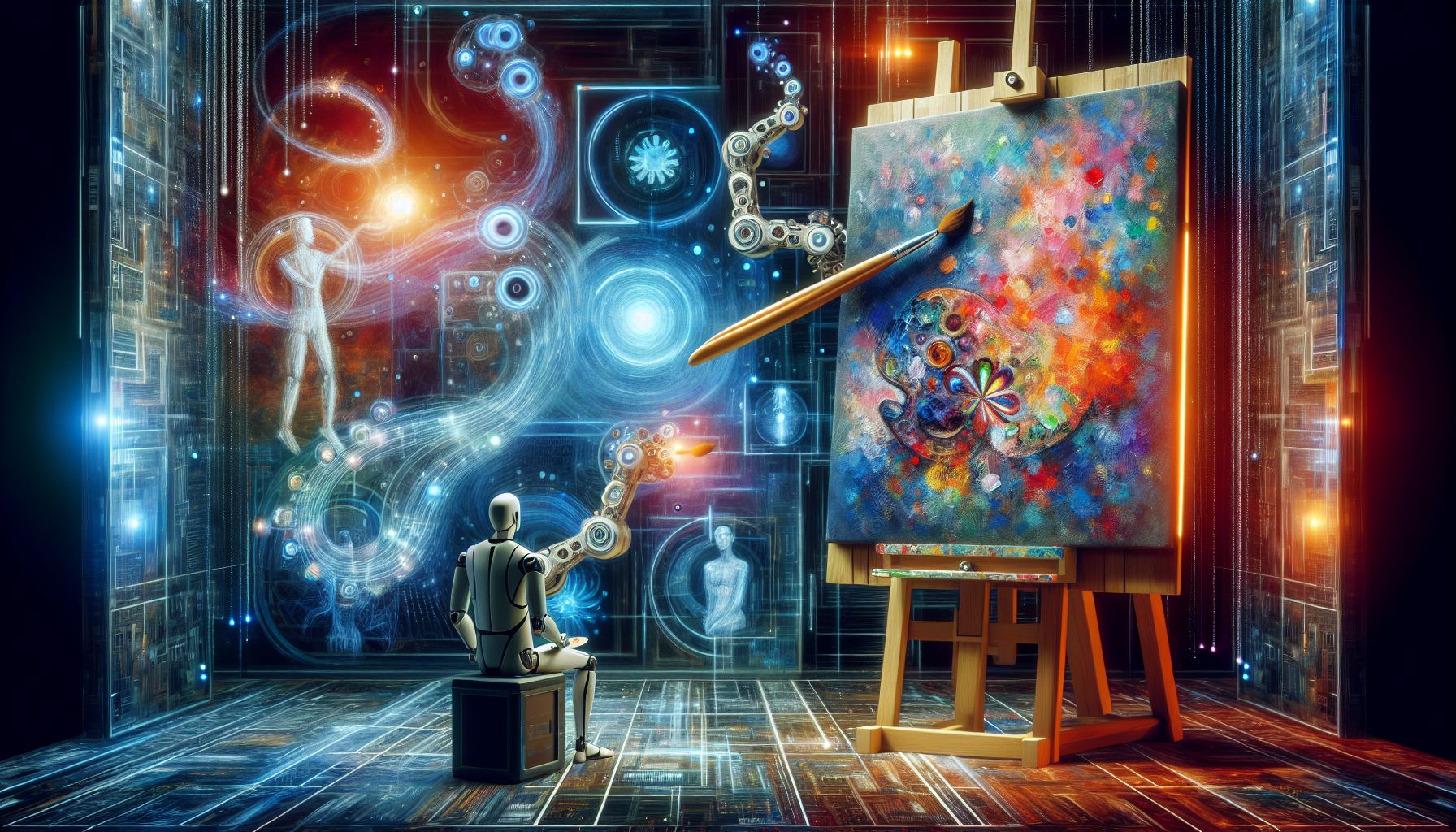
Hey tech adventurers! Today, join me on a crazy exploration of the wonderland that is AI in creative arts. It’s 2023, and by now, most of us are familiar with artificial intelligence busily upgrading sectors like finance, healthcare, and my bedtime reading recommendations (hello, personalized algorithms). But the top story of the year is how AI is immersing itself creatively and taking strides in reimagining the arts.
The Dawn of AI Creativity
Remember the days when Siri was our best impersonation of Jarvis from Iron Man? Fast forward to today, and AI isn’t just a passive voice assistant. It’s painting digital murals, composing award-winning symphonies, and maybe even outperforming your average New York Times bestselling novelist from time to time. The rise of artistic AI would surely make Vincent van Gogh raise an eyebrow or two!
Earlier this year, an exhibition in Milan displayed an entire gallery of AI-generated art pieces, gathered globally from minds unseen. Tools like DeepArt and Midjourney are enabling everyday enthusiasts and even seasoned artists to unleash whole vistas of creativity as these little tech marvels bring neural networks into art spaces. Talk about making expensive art supplies a bit nervous!
How AI is Repainting the Canvas… Literally
Let’s dive a little into how it all works. Creative AI comes alive mainly through algorithms occupying different schools of practice. You’ve got the GANs (generative adversarial networks), those mischievous little architectures where two neural networks essentially enter an extended paint-off battle, each trying to outdo one another. Autoencoders, with their skills at understanding and reproducing complex patterns, are spending their time dreaming new designs into existence.
Consider this: Instead of trudging through brushes and pixels, artists now collaborate directly with neural networks that intuitively understand their unique styles. It’s like having a co-pilot who knows how to blend Antialias and Monet with a flick. AI tools like DALL-E 3 are letting everyone take a dip into blending the traditional with the digital to some pleasantly surprising results.
‘Starry Night-esque’ or ‘The Persistence of Memory Code’? Whatever floats your refurbished brush of creativity, my friend!
AI’s Role in the Musical Neighborhood
If your left-brain assumes it’s devoid of the dynamic symphony, think again. Music, the time capsule defining epochs, hasn’t slipped AI’s expedited grasp.
Generative music, fueled by machines incredibly adept at feeding from diverse genres, is composing tracks that mimic and often innovate usual patterns. Imagine an avant-garde symphony able to match Tchaikovsky’s sophistication with a hint of Daft Punk’s panache. Programs like Amper already assist users with no formal musical expertise to compose impressive soundtracks that classic composers could only dream were possibilities!
Will an app help lead the next Woodstock resurgence? Hey, in a world where Justin Bieber made it on YouTube, I’m holding steady on extreme possibilities!
Shadows in the Spotlight: Challenges of AI in Arts
Alright, some fair skepticism has a place here. Let’s roll back and reflect momentarily. As technology meanders through artistic processes, there are clear debates on authorship, originality, and radically dismantling nostalgic notions of artistry.
Redistribution of artistic credit creates delicate issues here. A human works with remarkable vision but can be met with courts appealing for persistently elusive concepts called “authorship.” Strange scenarios could unfold when an artist hiring a GAN designer gives birth to confused infringement claims.
And ask any hardcore Helvetica-respecting traditionalist, you may find opposing expressions running deeper than what our elegant glowing future suggests!
Looking Ahead: What’s Next for AI and Art
Honestly, trying to predict where this is all heading feels a bit like reading tea leaves. The technology is moving so fast that what seems impossible today might be commonplace next year. I find myself wondering if we’ll see AI that can truly understand emotional context, or if human creativity will always have that special something that machines can’t replicate.
What I do know is that the artists who are embracing these tools now are creating work that would have been unimaginable just a few years ago. They’re not being replaced by AI, they’re using it as a new kind of paintbrush. The results are sometimes weird, sometimes wonderful, and always interesting.
Maybe the real magic happens in that collaboration between human intuition and machine capability. Time will tell if this partnership leads us somewhere completely new or just gives us shinier versions of what we already know.
Wrapping Up This Creative Journey
Fellow tech enthusiasts, we’ve covered a lot of ground today exploring how AI is reshaping creative arts. From neural networks painting masterpieces to algorithms composing symphonies, we’re living through a fascinating moment in creative history.
Sure, there are questions about authenticity and authorship that we’ll need to work through. But there’s also incredible potential for new forms of artistic expression that blend human creativity with machine learning in ways we’re just beginning to understand.