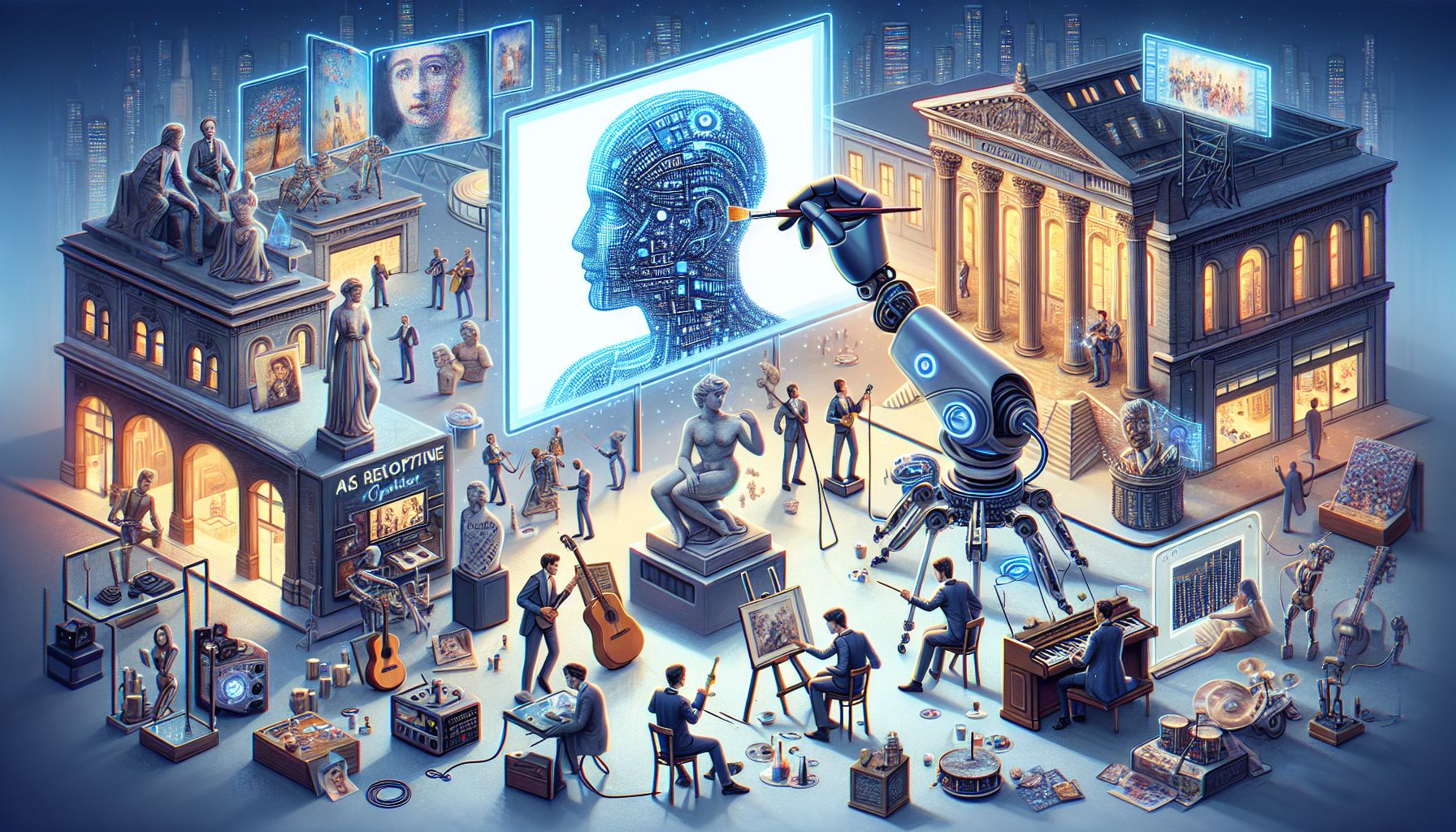
Hey, tech enthusiasts! Grab your coffee and settle in for some caffeinated speculation about how the digital age is flipping the script on creativity. Today, we’re diving into the exciting, sometimes bewildering world of Generative AI in the creative arts. Picture this: An AI bot crafting symphonies, painting masterpieces, and even penning novels. Sounds like science fiction? Think again. We’re not just in a new chapter here. We’re watching creativity itself get completely rewritten.
Breaking Down the Basics: What Is Generative AI?
Generative AI is all about creating something new. Traditional AI models are like those folks who can recite Shakespearean sonnets but would give you blank stares if you asked them to write a line themselves. Enter generative AI, a type of machine learning that actually creates stuff. Think of OpenAI’s DALL-E, which creates images just from text descriptions, or GPT-3 (maybe you’ve heard of it!) that juggles words into coherent articles, poetry, and entire books. And don’t even get me started on the beats these AI systems can throw out like digital Cardi Bs.
A New Palette: How AI Is Changing Visual Arts
So, AI and visual arts. Is it a match made in silicon heaven or just a fling? Turns out, it’s much more than a phase. AI systems aren’t stuck coloring between the lines anymore. Some creations look hauntingly beautiful. Others baffle you, like trying to decode a Picasso fever dream. We’ve already got AI-generated artwork selling for serious money at auctions. Christopher Wool, eat your heart out.
While purists argue that AI art lacks human soul, collectors are definitely cashing in. Why does this matter? Simple. It makes art creation accessible to everyone. Whether you’re tech-savvy, art-curious, or neither, you can create. And with each digital brushstroke, AI pushes us to imagine new forms we never thought possible.
Composers, Meet Your Digital Doppelgängers
When Bach meets bytes, who wins? I’ll nerd out on some notable names: AIVA (Artificial Intelligence Virtual Artist) composes music like a digital Ludwig van Beethoven. Tools like these let musicians experiment beyond conventional limits. Isn’t that wild? The difference is, these composers don’t need to feel emotions or perform live (unless Skynet becomes real, then all bets are off).
What does this mean for budding musicians? Start thinking collaboration, not competition with these digital maestros. Consider AIVA less a replacement and more a creative partner. You could finally write that cross-genre album you always dreamed of, a magnum opus worthy of echoing through Spotify algorithms worldwide.
Written Words Reimagined: Authors and AI Tag Teams
We’ve all been told to keep our imagination active with a good book. But what if our favorite novels were collaborations between human creativity and artificial intelligence? Some might view this as literary lunacy, but here’s where it gets interesting.
Ever heard of AI writers that can flesh out characters they never dreamed of creating? With AI helping shape stories, this collaboration becomes a way to innovate within storytelling constraints we’ve long considered unbreakable. Content creators in screenwriting, video game dialogue, and other literary fields are using AI to give classic storytelling completely new spin-offs.
Imagine Shakespeare co-written by GPT-3. An Artificial Bard! Suddenly, “Romeo & Juliet 2” dealing with full-throttle interplanetary conflict doesn’t seem like just some publisher’s caffeine-fueled weekend dream.
Addressing Implications and Human Concerns
Alright, let’s pump the brakes for a second. The skeptical whispers don’t escape me: “But what about displaced artists? What if this super-advanced spellcheck clones mediocrity, or worse, causes creativity to flatline?” It’s a valid existential concern wrapped in robot aesthetics.
But society isn’t swapping creatives for CPUs just yet, and probably never will. The general consensus places these tools as giving autonomy back to artists for their inspired work. The optimal approach suggests partnership, not dominance from either side. Just collaborative coexistence that goes beyond the usual creative conversations.
What’s Coming Next (My Best Guess)
Picture a world somewhere between Blade Runner’s future-goth aesthetics and Neo-Tokyo’s cyberpunk vibes. Artists will sketch ideas that AI instantly transforms into full compositions. Musicians will hum melodies that become complete orchestral arrangements. Writers will outline plots that AI helps develop into rich, detailed narratives.
Tomorrow’s creative process might be this beautiful, bittersweet collaboration that produces art we can’t even imagine today. It’s exciting and slightly terrifying at the same time.
Conclusion: Embrace the New Medium
Generative AI isn’t going to dominate the creative world unchallenged, and it shouldn’t. The real magic happens in the collaboration between human imagination and artificial capability. We’re still figuring out what this partnership looks like, and honestly, that uncertainty is part of the excitement.
The art world will never be quite the same again. We’re standing at the edge of something completely new, and I think that’s exactly where creativity thrives best.