Breaking Down Barriers: The Revolutionary Role of Blockchain in Tech Startups

Hello, fellow tech enthusiasts! If you’re anything like me, you get a buzz from sipping your morning coffee while reading about the latest tech developments. Today, I’m focusing on something that genuinely excites me: how blockchain technology is changing the game for tech startups.

I want to explore how this innovation has moved beyond being just another buzzword. It’s actually creating real changes across different industries, sometimes in ways we expected and sometimes in ways that caught us completely off guard. Let’s dig into this digital world and see what’s really happening.

What Makes Blockchain Actually Useful?

Honestly, few technologies this century have generated as much hype as blockchain. While it started with cryptocurrencies, the applications have spread into almost every industry you can think of. What I find most interesting about blockchain is its decentralized nature. It allows transparent, secure transactions without traditional middlemen taking their cut at every step.

What does this mean in practice? You can send money without banks taking fees, buy assets without title companies adding costs, and have better protection against cybersecurity threats.

Remember When Everyone Was Skeptical?

A few years ago, plenty of people on Wall Street doubted whether blockchain could actually challenge established financial processes. They thought it was just another tech fad that would fade away. How wrong they were.

I remember dealing with traditional financial systems myself. Trying to transfer money or verify transactions meant endless paperwork, multiple signatures, and waiting days for simple processes. The bureaucracy was exhausting, and the fees kept adding up. That’s when I really understood why people were so excited about alternatives.

How Startups Are Using Blockchain

Here’s where things get interesting for small companies and startups. Blockchain technology is leveling the playing field in ways that seemed impossible just a few years ago. Small companies can now access financial services, supply chain management, and verification systems that used to be available only to large corporations with massive budgets.

Smart contracts are probably the most practical application I’ve seen. These allow startups to automate agreements and payments without lawyers or intermediaries. A startup can set up automatic payments to suppliers, instant revenue sharing with partners, or immediate refunds to customers based on specific conditions.

Real Benefits for Small Companies

The cost savings alone are impressive. Traditional payment processing can eat up 3-5% of transactions, but blockchain alternatives often charge less than 1%. For a startup operating on thin margins, that difference can determine whether they survive their first year.

But it goes beyond just saving money. Blockchain gives smaller companies credibility. When your transactions are recorded on an immutable ledger, customers and partners can verify your track record. This transparency helps new companies compete with established players who previously had all the trust advantages.

I’ve seen startups use blockchain for everything from proving the authenticity of luxury goods to creating decentralized social media platforms. The technology removes barriers that used to require significant capital or connections to overcome.

The Reality Check

Of course, blockchain isn’t magic. The technology still has real limitations. Transaction speeds can be slow, energy consumption is often high, and the learning curve is steep. Many startups have discovered that implementing blockchain solutions takes longer and costs more than they initially expected.

The regulatory environment remains unclear in many jurisdictions. Startups using blockchain technology often find themselves navigating complex legal requirements that change frequently. This uncertainty makes it harder to plan and secure investment.

But despite these challenges, I’m seeing more startups successfully integrate blockchain into their core business models. The ones that succeed usually start with a specific problem that blockchain solves well, rather than trying to use the technology for everything.
The Wonder of Generative AI: Painting the Future With Pixels and Passion

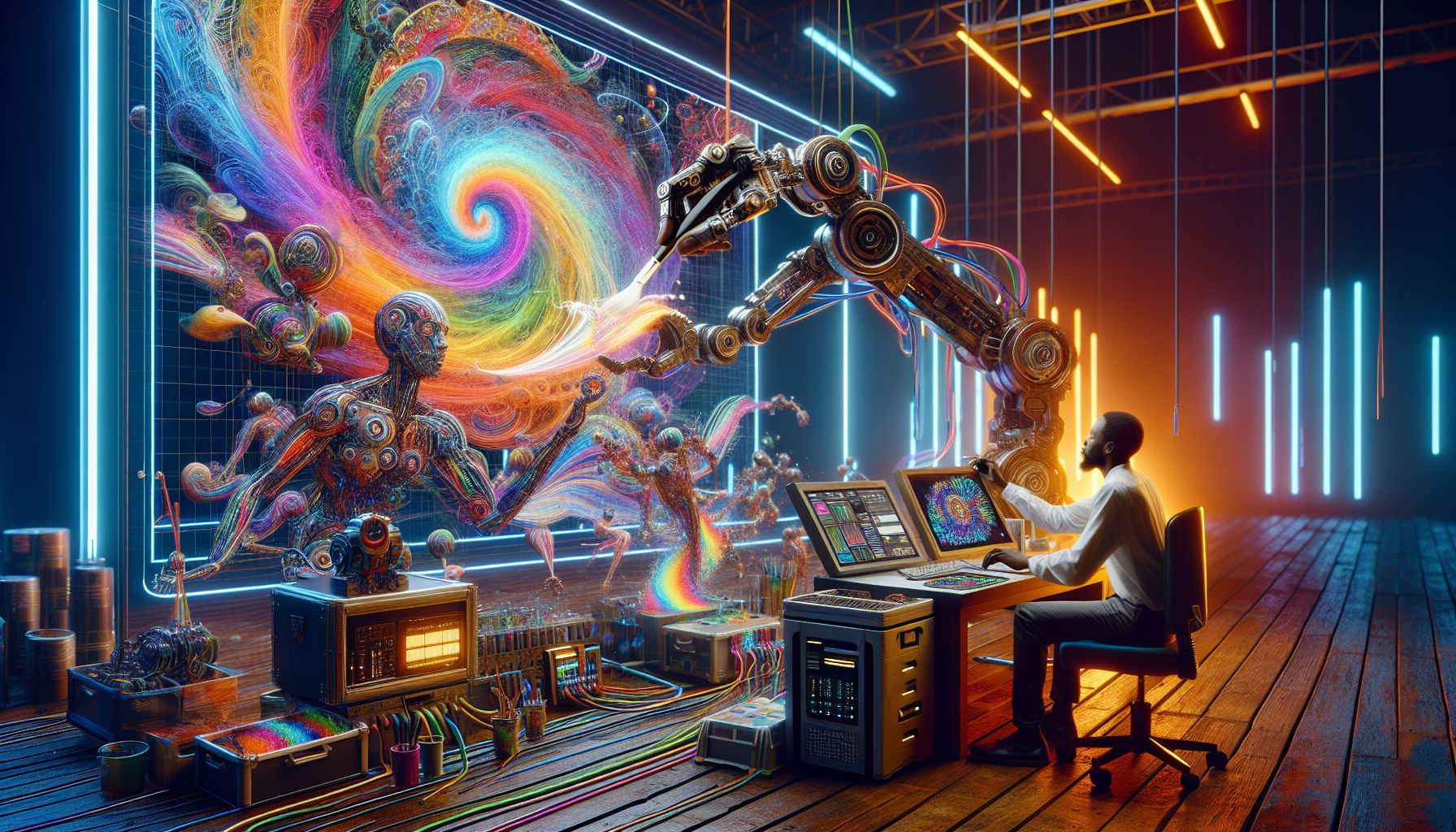
Alright folks, strap in because we’re about to dive into the buzzing world of generative AI — not just any part of it, mind you, but the jaw-dropping, canvas-remixing, imagination-bending universe of AI in creative arts. It’s where algorithms meet artistry and together, they strut down the digital runway displaying unimaginable visuals and narratives. And yes, I’ll admit, part of me feels like a character in a sci-fi novel come to life. But trust me, by the end of this post, you might feel the same way yourself!

Digital Brushes and Binary Palettes: A New Age of Creativity

So, how exactly does AI create art? Well, hold onto your berets! The magic behind this consists of complex neural networks and machine learning models, particularly Generative Adversarial Networks (GANs). If you haven’t met GANs yet, let me introduce them to you. They’re like a pair of fraternal twins — one generates while the other checks its work, kind of like an overly critical older sibling with an eye for details.

GANs have enabled AI software to create genuinely mesmerizing works of art. Artists generate a concept, feed it into software like Lava Labs’ TensorFlow or OpenAI’s DALL-E, and voila! The AI doesn’t just stick to realistic images. It’s out there, breaking the bounds, dabbling in hyper-abstract and beyond-realistic art forms. We’re seeing computer-generated art make it into galleries, catching the eyes and literally rekindling passions that some tech futurists might have declared fading away.

Collaboration or Contention? The Artist’s Perspective

Why all the hoopla, you ask? Well, some might think robots whisking paint on canvas might step on toes. And while there’s a tiny tiptoe factor there, human creativity turns out not to be quite so fragile. Take German artist Mario Klingemann, a digital artist who has embraced neural networks to push his artistry into new unexplored terrains. Far from having his spark crushed, he describes a modern partnership where the AI becomes an extension rather than a replacement of his creative mind. Yeah, that definitely sounds like high-flying Jetsons-level stuff!

Artists aren’t leaving it all to algorithms, though. These systems need training from human-made data, and so creativity holds firmly onto her trump card. More often than not, it’s a collaborative dance where code mingles with creative intuition—to reveal amazing treasures neither could achieve alone. And quantum paintbrushes aren’t even a thing. Yet.

Rethinking the Canvas: Challenges Abound

Don’t pop that confetti just yet. It’s not all rainbows and art-infused da Vincis. While generative AI art’s potential is mind-blowing, it comes with complications (or should we say, “code strings”). Ever wonder about copyright? Yep, the question flares up and sends ripples across legislatures. Who technically owns an AI-created piece—its coder, its user, or the servers humming away in Silicon Valley somewhere?

And let’s not breeze past the darker side—where deepfake technology messes with truth. But generative art isn’t plotting some dystopian takeover. We’re looking straight into these challenges with hard lessons at our feet, reminding us that unleashing powerful digital tools finds balance only through ethical guidelines.

What’s Coming Next?

Generally, we humans get pretty excited about interesting tech that changes how we think about imagination and creativity. When I look at all the moving parts together, visual creation driven by AI offers real possibilities for museums, websites, games, and who knows what else. Here’s hoping tomorrow brings us new collaborations between human artists and their digital tools.

I’m curious to see how this partnership between human creativity and machine learning will develop. Will we see entirely new art forms emerge? Will traditional artists find ways to work with AI that we haven’t even thought of yet? The technology is moving fast, but the really interesting part is watching how creative people adapt and use these tools.

Right now, AI art feels like we’re at the beginning of something big. Artists are experimenting, galleries are taking notice, and the rest of us are trying to figure out what it all means. Whether you’re excited or nervous about AI in the arts, one thing’s certain: it’s not going anywhere. So we might as well buckle up and see where this creative ride takes us.

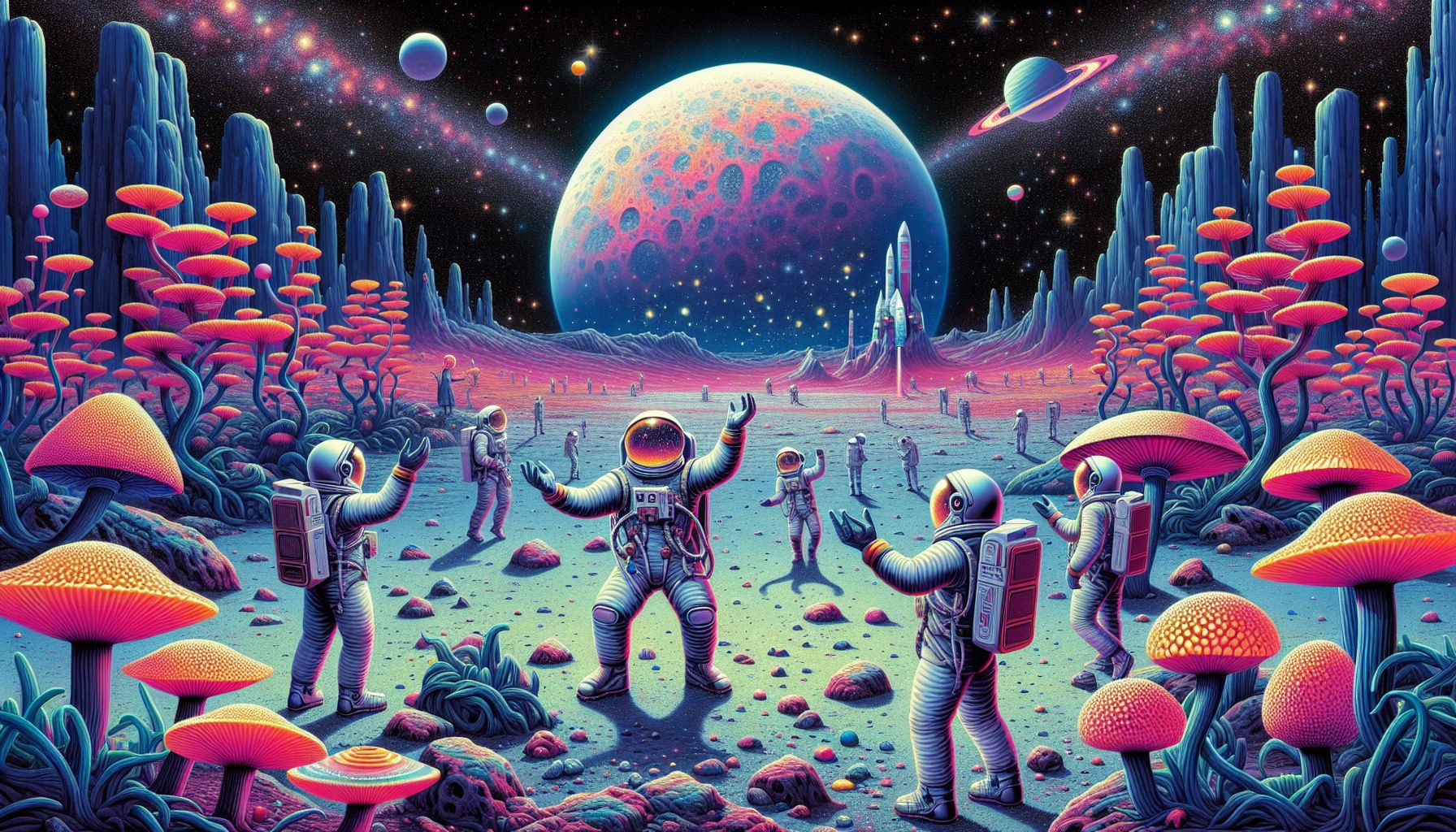
Dancing on Alien Terrain: The New Age of Space Above Us

Hey folks! Today, we’re launching into orbit (metaphorically speaking) to talk about the electrifying developments in space travel. It feels like we’re living in a science fiction novel with all the technology bursting forth. Companies, countries, and maverick billionaires have brought space to our doorsteps, and it’s shaping up to be something straight out of a techno-utopian dream. I can’t help but think that those childhood fantasies of dwelling in space habitats are closer to reality than we ever imagined.

The State of Space Explorations

First things first—space travel isn’t just a billionaire’s playground anymore, though Elon Musk and Jeff Bezos are having their share of fun. The past decade’s breakthroughs in rocket technology, public-private partnerships, and the sheer volume of ambitious missions have made space more accessible. We’re talking about human landings on Mars and little robotic explorers chilling on asteroids.

Right now, we’ve got SpaceX making waves with their reusable rockets, cutting the costs traditionally associated with venturing out of our atmosphere. Their mission to send the first humans to Mars is audacious and fascinating. It’s practically the 21st century’s moon landing. Let’s also not forget NASA’s Artemis missions, which are setting the stage for a moon colony—the lunar pit stop before the big Mars voyage.

Space is More Than Touristy Dreams

As I sit here thinking about all this, I realize less mainstream actors are entering the scene—companies looking beyond commercial tourism. There are serious logistics involving deploying satellites, researching new materials without Earth’s pesky gravity getting in the way, and mining near-Earth asteroids for precious minerals. I’m practically buzzing thinking of all the ventures set to reshape Earth’s industries.

Just imagine: some company sending cute little droids to an icy asteroid to collect platinum. A stock crash might look tragic by comparison. It’ll create an entire sub-economy for spacecrafts, operators, not to mention lawyers specializing in interstellar law. (Seriously, the legal stuff no longer sounds boring once you slap “space” in front of it!)

Innovation: Humanity’s Next Leap

So, why should you care? Other than bragging about our comeback whenever extraterrestrial skeptics make their voice heard? It’s about that infectious fervor in scientific breakthroughs and overcoming impossible odds. Global collaboration sees missions like the James Webb Space Telescope revealing untold stories of the universe, feeding our unending curiosity.

Space innovation doesn’t just help space travelers—it feeds back tech advances right to our smartphones. AI developed for complicated spacecraft and optimized energy solutions create benefits that reach home, covering startups and mainstream populations alike. Heck, tools helping astronauts grow rice on a moonlit crater could offer innovative agricultural models for Earth’s rapid urbanization.

Getting Ready for Liftoff

Are you one of those people who diligently avoid plastic usage but wouldn’t mind going ‘Zero G’ at some premiere tech resort in orbit? Space tourism companies are already working on making those rich space holidays a reality. As wild as it sounds, passenger testing is happening right now to create systems that can handle the pressure.

The cultural impact of all this is huge too. When we start seeing regular people travel to space, it changes how we think about our place in the universe. The boundaries that seem so important down here start to feel pretty arbitrary when you’re looking at Earth from 200 miles up.

What’s Next?

Look, I’m genuinely excited about where this is all heading. Sure, there are massive challenges ahead—the costs, the safety concerns, the environmental impact of all these rockets. But watching humanity take these first real steps toward becoming a spacefaring civilization? That’s something special.

We’re living through a moment that future historians will mark as the beginning of the space age. Not the government-only space race of the 1960s, but the real deal—when regular people started leaving the planet. And honestly, I can’t wait to see what comes next.

Why We’re All Jazzed About Artificial Intelligence: The DIY Renaissance

Hey fellow tech explorers,

Ever stare at the cloudless sky and wonder if the future’s just a simulation of reality cause today’s tech feels like magic? Yep, me too, especially when I look at what’s happening with Artificial Intelligence (AI). Now, hold your horses; I know the term “AI” has been thrown around like Frisbees at a startup office picnic, but today, we’re gonna chat about something really extraordinary that’s happening in this world. Think of it as the renaissance artists built with circuit boards and deep learning instead of brushes and canvases.

The Craftshop of Virtual Thinkers

Artificial Intelligence, in its current form, is like a packed craftshop where each piece of tech you open could change our lives in really weird ways. I’ve been elbow-deep exploring setups like OpenAI’s ChatGPT, and it’s wild how a few lines of code can actually chat with your brain and whip up essays, poetry, and even love letters. Really though, who needs Tinder when your AI’s got game? (Kidding, don’t dump your date plans, sort out those commitment issues like an adult).

Cool New Kicks: Advanced AI Models

Let’s break away from dingy basements and pizza parties. AI applications are going mainstream, struttin’ their stuff down Wall Street. These tech maestros aren’t just good at Uncle Bob-level small talk anymore; they’re everywhere. OpenAI with its breakthrough language models, NVIDIA storming the visual realms and Google’s aces up the Quantum sleeves are visions of reality that redefine speed, learning, and adaptability.

Advanced Language Models are being improved every day, breaking into schools to tutor us, within design studios helping sculptors chalk out the next visionary sculpture. Basically doing everything short of picking a killer prison-break tune. This isn’t just progress; it’s watching technology grow something that feels almost human, until it becomes just another buzzword. Whoops!

Machine Learning Gets Real

Look, I’m gonna level with you here. Machine Learning is AI’s practical cousin that actually gets stuff done. It finds patterns in the chaos we call data and makes sense of it all. The interconnected systems work together, building these complex networks based on deep learning that can recognize faces, predict weather, or recommend your next Netflix binge.

Engineers are constantly fine-tuning these systems, fighting bugs and glitches to make AI more reliable. It’s fascinating work, but let me spare you the technical jargon that makes your eyes glaze over. The short version? These systems learn from massive amounts of data and get better at their jobs over time. Pretty straightforward when you strip away all the academic complexity.

The Nakamoto Surprise: Blockchain Beyond Bitcoin

Hello, tech trailblazers! 👋 Welcome to another trip down the blockchain rabbit hole. I want to share a different perspective on blockchain technology that’s reshaping our tech dreams. While everyone watches Bitcoin’s wild ups and downs, the technology behind it—blockchain—is quietly transforming pretty much every industry you can think of. If “blockchain” just makes you think of cryptocurrency treasure maps, trust me, there’s way more complex and exciting stuff happening behind the scenes.

Let’s dig into how blockchain actually works, cut through all the skepticism swirling around it, and explore some genuinely cool transformations happening right now. We’re talking about supply chains that actually work efficiently, and entirely new digital ecosystems built on this technology.

What is Blockchain, Really?

Think of blockchain like a digital ledger that everyone can see but no one can cheat. Instead of trusting one company or bank to keep records, the information gets stored across thousands of computers. Each “block” contains a bunch of transactions, and they’re all chained together chronologically. Once something gets added to the chain, it’s basically impossible to change without everyone noticing.

The real magic happens because it’s decentralized. No single authority controls it, which means no single point of failure. Traditional databases can get hacked, corrupted, or manipulated by whoever runs them. Blockchain makes that incredibly difficult because you’d need to somehow hack thousands of computers at the exact same time.

Where Blockchain is Making Real Changes

Beyond the cryptocurrency hype, blockchain is solving actual problems in surprising places. Supply chain management is probably the most practical application I’ve seen. Companies can now track products from raw materials to your doorstep, with every step recorded permanently. No more mystery meat or counterfeit goods slipping through the cracks.

Healthcare is another area that’s getting interesting. Patient records on blockchain could mean your medical history follows you securely, no matter which hospital or doctor you visit. Real estate transactions are becoming faster and more transparent. Even voting systems are being tested with blockchain to prevent fraud and increase trust in elections.

The Reality Check

Look, I’m not going to pretend blockchain solves everything. It’s still energy-intensive, can be slow, and honestly, most people don’t understand it well enough to use it properly yet. But the potential is there, and we’re seeing real implementations that work.

The technology is moving past the speculation phase into actual utility. Companies are finding specific problems blockchain solves better than traditional methods. That’s when things get genuinely exciting, not just profitable.

##The AI Evolution: How Generative AI is Sculpting Future Interactions

Over the past few years, artificial intelligence has moved way beyond being just a tech buzzword. It’s become a real tool that’s changing how we work, create, and communicate. You know that Spider-Man quote about great power and great responsibility? That pretty much sums up where we are with AI right now. There’s incredible potential here, but also some serious complexity to navigate. Generative AI, in particular, has been making some pretty impressive leaps lately.

Generative AI is the part of AI that can create things that look and sound like they came from humans. We’re talking text, images, audio, even data sets. The tech behind this relies on neural networks, natural language processing, and machine learning algorithms that have gotten really good at learning patterns without being explicitly programmed for every scenario.

The Emergence of Generative AI

Companies are using tools like OpenAI’s GPT to automate creative work, change how we approach education, and blur the lines in media and entertainment. Some researchers think we’re heading toward what they call “art-empathy” where machines create content that actually makes us feel something.

These algorithms can be pretty unsettling or incredibly helpful, depending on how you look at it. They can write news articles that sound completely human or create paintings that look like they came from a real artist. It’s both exciting for creativity and a bit concerning when you think about how it might mess with our perception of what’s real.

Generative Design: A Boon for Industries

One area where this tech is really making waves is generative design. Instead of engineers manually creating every design iteration, algorithms generate tons of alternatives. Car companies, aerospace firms, and architects are using this approach. The machines can iterate through possibilities faster than any human team could manage.

We’re seeing materials engineered at the atomic level to manipulate light or heat in ways that weren’t possible before. The results often look nothing like traditional designs, but they perform better than anything humans would have come up with on their own.

Democratizing Creativity & Revolutionizing Communication

There’s something to that Picasso quote about creation being an act of destruction first. Generative AI is definitely breaking down old barriers to creative work. Text generation tools that handle multiple languages are making translation and multilingual content much more accessible.

Take something like AI animation tools that can bring literary characters to life from just a script description. These technologies lower the bar for people who have creative ideas but maybe not the technical skills to execute them traditionally.

Communication is changing too. The chatbots we interact with now are still pretty basic, but customer service AI and diagnostic tools are getting more sophisticated. We’re seeing real improvements in how naturally these systems can handle conversations.

Challenges to Overcome

But let’s be realistic here. Every new technology comes with problems to solve. Security issues are a big concern, especially around transparency and accountability. When an AI system makes a mistake or gets manipulated, it’s not always clear how to fix it or who’s responsible.

Ethical Alignment & Societal Shifts

The ethical questions are probably the trickiest part. How do we make sure these systems align with human values when humans themselves don’t always agree on what those values should be? There are ongoing debates about bias in AI systems, job displacement, and how to regulate this technology without stifling innovation.

We’re also seeing shifts in how people think about authorship and creativity. If an AI helps write a song or design a building, who gets credit? These aren’t just philosophical questions anymore, they have real legal and economic implications.

The Path Forward

Generative AI is creating new economic opportunities, especially in creative fields. But it’s also forcing us to rethink some fundamental assumptions about work, creativity, and human-machine collaboration.

The key seems to be finding the right balance. We want to harness the benefits of this technology while being thoughtful about the risks. That means ongoing research into AI safety, better frameworks for accountability, and probably some new regulations as we figure out how this all plays out.

What’s clear is that generative AI isn’t going anywhere. The question is how we shape its development and integration into society. The decisions we make now about research priorities, ethical guidelines, and regulatory approaches will determine whether this technology becomes a genuine benefit or creates new problems we’re not prepared to handle.

Is Artificial General Intelligence Closer Than We Think? Exploring AI-Driven Promises

Hey, tech explorers! 🎩🤖 If you’re like me, driven by daydreams about utopian futures powered by Artificial Intelligence (AI), grocery-ordering drones, and empathetic robots finally unchaining us from mundane chores – you’re in for a treat! Theories around singularity and AI superseding human intelligence might have a fascinating playground today in our blog post about Artificial General Intelligence (AGI).

Are we riding high on a soon-to-be wave of AGI, or is it just wistful thinking marinated in sci-fi generational indoctrination?

Artificial Intelligence in the Mainstream: More than Just Rocket Science

We’ve seen artificial intelligence work its way into the mainstream narrative. Netflix sci-fi hits about intelligent robots, dystopian shows built on AI themes. Technologies powered by AI, like recommendation engines, chat interfaces, and sentiment analytics, are part of our daily routine now.

But within AI and Machine Learning circles, there’s one idea that keeps coming up: AGI. The dream (or nightmare, depending on who you ask) that machines could one day match human intelligence across the board.

Defining the Pandora’s Box: What is Artificial General Intelligence?

For newcomers to the AGI conversation, here’s the simple version: Artificial General Intelligence is AI that matches human-level cognitive abilities. Not just chess or image recognition, but the full spectrum of what human brains can do.

Think about it. Right now, we have narrow AI that’s brilliant at specific tasks but useless outside its domain. AGI would be different. It could learn, reason, create, and adapt across any field, just like humans do. That’s both exciting and terrifying.

Current State of AI Development

Looking at where we are today, the progress is honestly impressive. Large language models can write, code, and reason in ways that seemed impossible just a few years ago. Computer vision systems recognize objects better than humans in many cases. Game-playing AI has conquered everything from Go to StarCraft.

But here’s the thing: these are still narrow systems. ChatGPT can’t drive a car. The AI that beats world champions at poker can’t write poetry. We’re still in the era of specialized intelligence, not general intelligence.

The Path Forward

Some researchers think AGI is decades away. Others believe we’re closer than most people realize. The truth? Nobody really knows. The timeline depends on breakthroughs we can’t predict and problems we haven’t solved yet.

What I find interesting is how the goalposts keep moving. Every time AI achieves something we thought was uniquely human, we adjust our definition of intelligence. Maybe that says more about us than about the technology.

Anticipating AGI: Revolution Isn’t as Far as Opposition Says

Whether AGI arrives in 10 years or 50, one thing’s certain: it will change everything. The question isn’t if, but when and how. And honestly? That’s both thrilling and slightly nerve-wracking to think about.