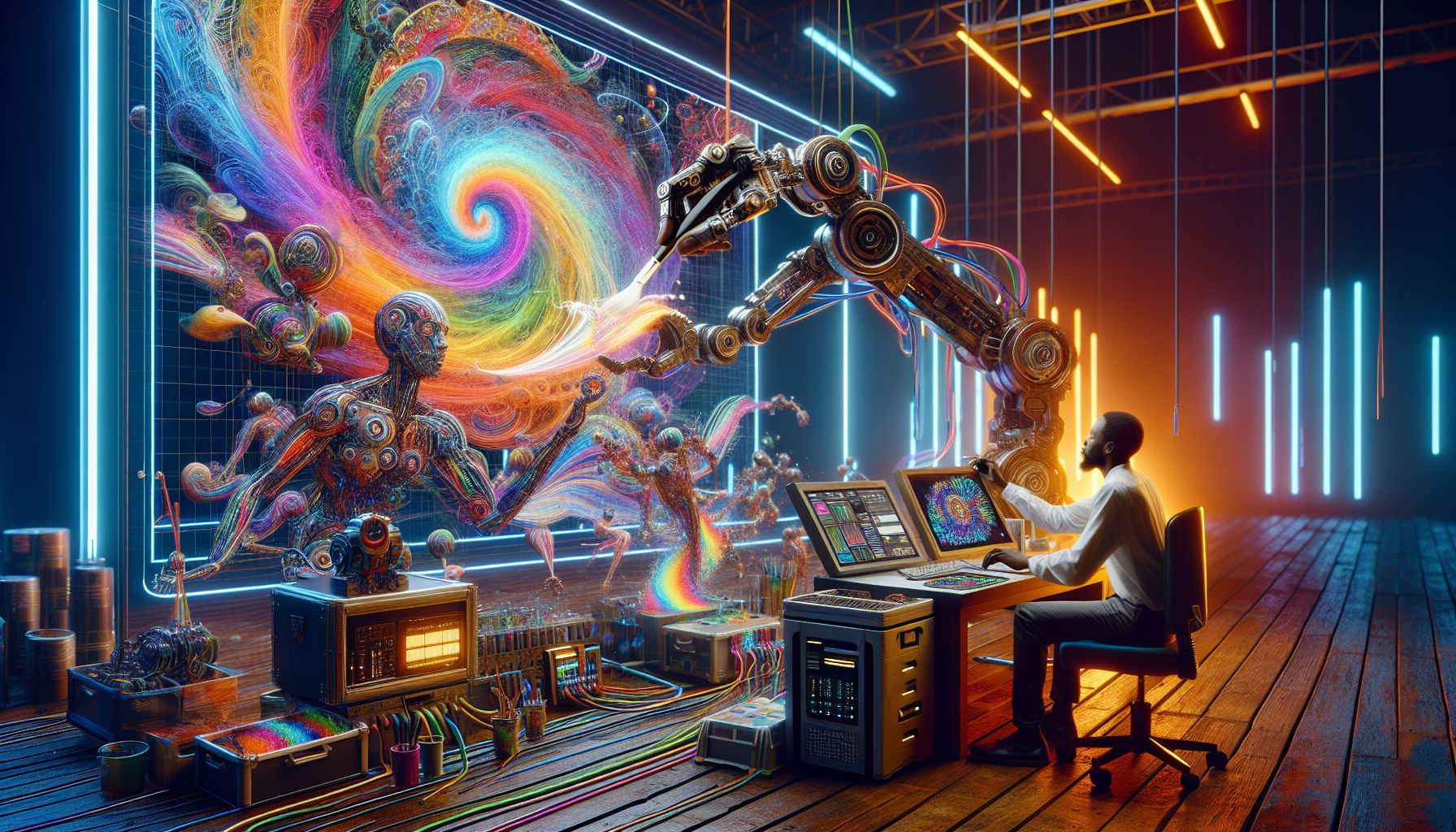
Alright folks, strap in because we’re about to dive into the buzzing world of generative AI — not just any part of it, mind you, but the jaw-dropping, canvas-remixing, imagination-bending universe of AI in creative arts. It’s where algorithms meet artistry and together, they strut down the digital runway displaying unimaginable visuals and narratives. And yes, I’ll admit, part of me feels like a character in a sci-fi novel come to life. But trust me, by the end of this post, you might feel the same way yourself!
Digital Brushes and Binary Palettes: A New Age of Creativity
So, how exactly does AI create art? Well, hold onto your berets! The magic behind this consists of complex neural networks and machine learning models, particularly Generative Adversarial Networks (GANs). If you haven’t met GANs yet, let me introduce them to you. They’re like a pair of fraternal twins — one generates while the other checks its work, kind of like an overly critical older sibling with an eye for details.
GANs have enabled AI software to create genuinely mesmerizing works of art. Artists generate a concept, feed it into software like Lava Labs’ TensorFlow or OpenAI’s DALL-E, and voila! The AI doesn’t just stick to realistic images. It’s out there, breaking the bounds, dabbling in hyper-abstract and beyond-realistic art forms. We’re seeing computer-generated art make it into galleries, catching the eyes and literally rekindling passions that some tech futurists might have declared fading away.
Collaboration or Contention? The Artist’s Perspective
Why all the hoopla, you ask? Well, some might think robots whisking paint on canvas might step on toes. And while there’s a tiny tiptoe factor there, human creativity turns out not to be quite so fragile. Take German artist Mario Klingemann, a digital artist who has embraced neural networks to push his artistry into new unexplored terrains. Far from having his spark crushed, he describes a modern partnership where the AI becomes an extension rather than a replacement of his creative mind. Yeah, that definitely sounds like high-flying Jetsons-level stuff!
Artists aren’t leaving it all to algorithms, though. These systems need training from human-made data, and so creativity holds firmly onto her trump card. More often than not, it’s a collaborative dance where code mingles with creative intuition—to reveal amazing treasures neither could achieve alone. And quantum paintbrushes aren’t even a thing. Yet.
Rethinking the Canvas: Challenges Abound
Don’t pop that confetti just yet. It’s not all rainbows and art-infused da Vincis. While generative AI art’s potential is mind-blowing, it comes with complications (or should we say, “code strings”). Ever wonder about copyright? Yep, the question flares up and sends ripples across legislatures. Who technically owns an AI-created piece—its coder, its user, or the servers humming away in Silicon Valley somewhere?
And let’s not breeze past the darker side—where deepfake technology messes with truth. But generative art isn’t plotting some dystopian takeover. We’re looking straight into these challenges with hard lessons at our feet, reminding us that unleashing powerful digital tools finds balance only through ethical guidelines.
What’s Coming Next?
Generally, we humans get pretty excited about interesting tech that changes how we think about imagination and creativity. When I look at all the moving parts together, visual creation driven by AI offers real possibilities for museums, websites, games, and who knows what else. Here’s hoping tomorrow brings us new collaborations between human artists and their digital tools.
I’m curious to see how this partnership between human creativity and machine learning will develop. Will we see entirely new art forms emerge? Will traditional artists find ways to work with AI that we haven’t even thought of yet? The technology is moving fast, but the really interesting part is watching how creative people adapt and use these tools.
Right now, AI art feels like we’re at the beginning of something big. Artists are experimenting, galleries are taking notice, and the rest of us are trying to figure out what it all means. Whether you’re excited or nervous about AI in the arts, one thing’s certain: it’s not going anywhere. So we might as well buckle up and see where this creative ride takes us.