The Intimate Economics of Email
While algorithms decide which voices reach which audiences, writers have found something surprisingly powerful hiding in plain sight: the email newsletter. What started as a basic communication tool has become a sophisticated publishing ecosystem. The Substack platform alone now hosts more than thirty-five million active subscribers across seventeen thousand paid publications. This isn’t just a trend. It’s a fundamental shift in how literary culture pays for itself.
The numbers reveal how hungry readers are for unmediated connection with writers. When readers choose to receive an author’s words directly in their inbox, they’re making a deliberate decision to prioritize that voice above the noise of social media feeds and algorithmic recommendations. This direct relationship creates something rare in our fragmented attention economy: reliable, recurring engagement between writer and reader.
Think about the sentence as the basic unit of this new economy. Each newsletter is a collection of carefully chosen sentences, delivered not to anonymous masses but to individuals who explicitly requested them. The writer knows their words will arrive in the most personal digital space, the inbox, where they compete not with endless scroll but with messages from friends, family, and colleagues.
Liberation from Platform Dependency
For decades, writers built their audiences on platforms they didn’t control, subject to sudden policy changes, algorithm adjustments, and corporate whims. The newsletter economy offers something different: ownership of the relationship itself. When a writer maintains an email list, they have a direct channel to their readers that can’t be throttled by engagement metrics or eliminated by platform changes.
This shift is more than tactical advantage. It’s a philosophical return to the basic compact between writer and reader. The subscription model requires readers to make an active choice, repeatedly, to engage with a particular voice. Writers must earn this attention not through viral moments or algorithmic favor, but through consistent delivery of value, insight, and craft.
Email list ownership has become the primary hedge against algorithmic dependency, offering writers a form of reader relationship insurance. While social media followers might see only a fraction of posts due to platform algorithms, newsletter subscribers receive every issue directly. This reliability transforms the writer-reader dynamic from lottery to contract.
The Million-Dollar Question
The most successful newsletter writers now earn more than one million dollars annually from subscription revenue alone. These figures are more than entrepreneurial success stories. They prove that readers will pay directly for writing they value when given the opportunity and the right delivery mechanism.
But these top earners reveal only part of the story. Most newsletter writers earn modest supplemental income, and the economics require careful attention to both acquisition and retention. Monthly churn rates average between five and eight percent for paid newsletters, meaning writers must constantly attract new subscribers to maintain steady revenue. This churn rate reflects the competition for reader attention and the ongoing challenge of providing consistent value.
The conversion metrics offer insight into reader behavior patterns. Established writers typically convert between three and seven percent of free subscribers to paid subscriptions. These percentages might seem modest, but they represent readers making deliberate financial commitments to support specific voices. Each paid subscriber becomes not just a revenue source but a stakeholder in the writer’s continued work.
Platform Competition and Writer Choice
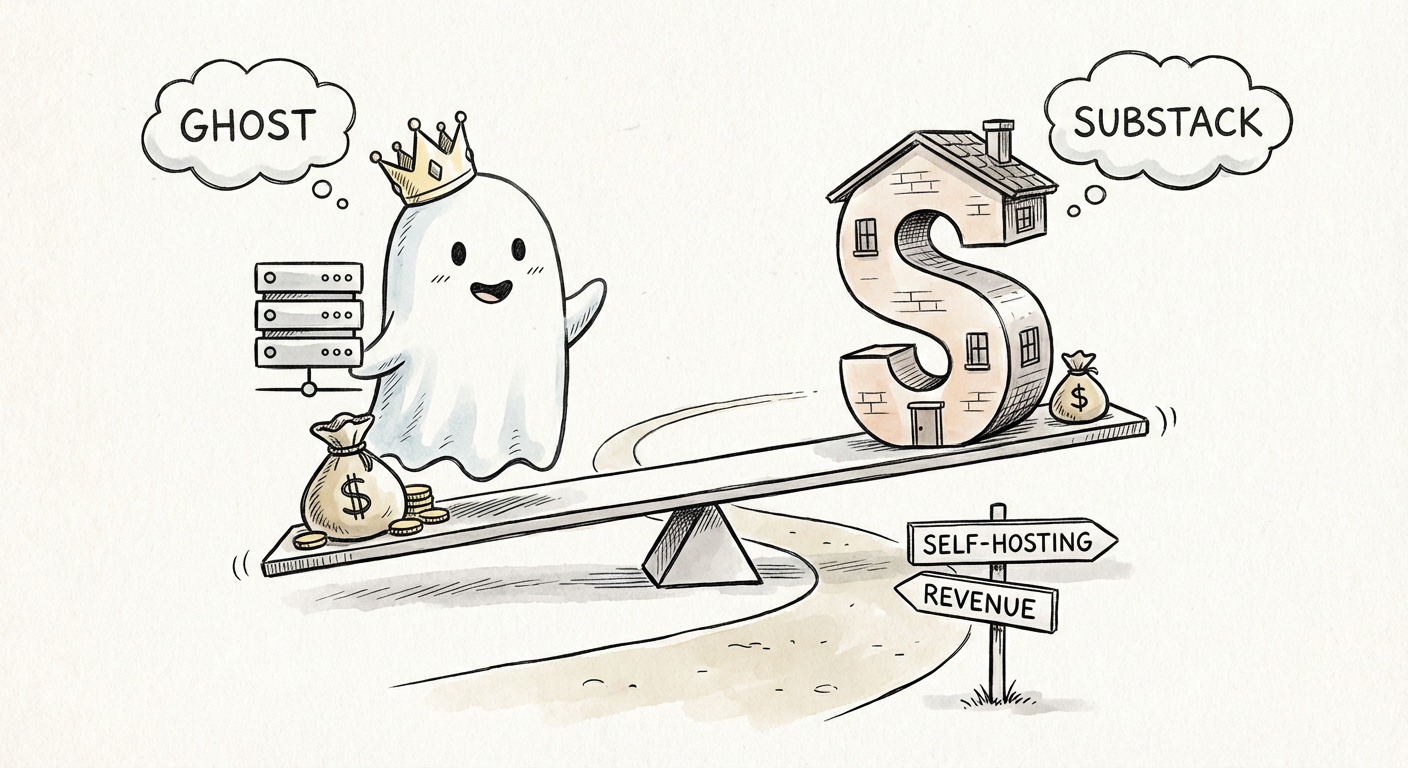
While Substack dominates newsletter conversations, alternatives like the Ghost publishing platform compete by offering different value propositions around revenue sharing and hosting options. Ghost appeals to writers who prefer greater control over their publishing infrastructure, allowing self-hosting while providing professional newsletter tools. This competition benefits writers by expanding their options and pressuring platforms to improve terms and features.
The platform choice reflects deeper questions about independence and sustainability. Writers must balance convenience against control, community features against customization options, and built-in discovery against complete ownership of their subscriber data. Each platform represents a different philosophy about the relationship between writer, technology, and reader.
These technical decisions matter because they shape the long-term viability of a writer’s direct relationship with their audience. The platform becomes part of the publishing infrastructure, and changing platforms later can prove difficult and costly in terms of subscriber retention and technical complexity.
The Future of Literary Patronage
Newsletter subscriptions are a modern form of literary patronage, where readers collectively support writers they want to continue hearing from. This model returns economic power to the basic unit of all writing: the relationship between a person who writes and people who want to read what they write. Unlike traditional publishing, which requires writers to appeal to editors and publishers who guess at reader preferences, newsletters allow writers to build direct evidence of reader interest and willingness to pay.
The subscription model also changes how writers approach their craft. Knowing that subscribers can cancel at any time creates pressure for consistent quality, but it also allows for experimentation and evolution. Writers can test different approaches, explore developing interests, and grow their voice over time while maintaining their core audience.
This direct funding model particularly benefits writers whose work might not fit traditional publishing categories or whose audience, while passionate, is too small for conventional publishing economics. The newsletter economy allows niche voices to find sustainable support from dedicated readers who value exactly what makes those voices distinctive.
As this ecosystem continues developing, it offers writers something increasingly rare: the possibility of building sustainable creative careers through direct reader support. The question for each writer becomes not whether to participate, but how to approach this opportunity with the same attention to craft and reader service that defines all good writing.