Why the BookTok Backlash of 2025 Is Actually Good for Literary Fiction: Sales Data Tells a Surprising Story

The Backlash Nobody Expected

Around the time Colleen Hoover’s “It Ends with Us” film tie-in edition hit bookstore tables in August 2024, something interesting started happening in the publishing world. Not the predictable thing. Not more people rushing to buy viral romance. Instead, a quiet counter-movement began rippling through the reading community, and the numbers are telling a story that contradicts every “reading is dying” article your boomer uncle forwards you.

By early 2025, the BookTok backlash had become impossible to ignore. Readers were openly expressing fatigue with algorithm-driven recommendations. Book communities started using phrases like “anti-algorithm” the way they might use “artisanal” to describe sourdough. Independent bookstore staff reported customers explicitly asking for recommendations that would never trend on social media. And here’s where it gets weird: literary fiction started gaining ground in ways it hadn’t in years.

I know what you’re thinking. BookTok drove roughly 35 percent of all adult fiction paperback sales in the US during 2024, according to data that just came out. That’s enormous. That’s the kind of market share that should make traditional literary publishers weep into their espressos. But the backlash that followed created something publishers weren’t expecting: genuine hunger for the opposite.

When Viral Becomes the Enemy

The thing about viral book culture is that it works too well. When millions of people watch the same emotional scenes spliced into fifteen-second videos, when you see the same titles everywhere, when your algorithm literally cannot recommend anything else to you, something breaks. The intimacy of reading gets replaced by a sense of obligation. Books stop feeling like personal discoveries and start feeling like homework assignments everyone’s doing together.

The “It Ends with Us” phenomenon amplified this feeling. Over 1.2 million copies of the film tie-in edition sold in its first month alone. That’s not just success. That’s saturation. That’s walking into every bookstore in America and seeing the same cover staring back at you from multiple displays. And for a lot of readers, especially younger ones who’d been the BookTok generation’s most enthusiastic adopters, it became a turning point.

What surprised me was the sophistication of this backlash. This wasn’t grumpy older readers gatekeeping from the sidelines. According to Pew Research Center: How Americans Read Books in 2025, 41 percent of BookTok readers aged 18 to 34 actively sought recommendations from independent bookstore staff specifically to avoid algorithm-driven picks. These are the people who built BookTok. They made it matter. And they’re deliberately choosing to step outside the system they created.

Literary Fiction Gets a Second Look

Here’s where the archaeology comes in. When readers started rejecting the algorithm, they didn’t just stop reading. They started digging backward through decades of backlist titles that had been quietly sitting in publisher warehouses, waiting for their moment. Penguin Random House reported a 22 percent jump in year-over-year backlist literary fiction sales in the third quarter of 2025. That’s not a blip. That’s a pattern.

The titles making this happen aren’t the obvious classics everyone pretends to have read in high school. These are the mid-career discoveries. The books that got overshadowed by their own era’s trending picks. The literary novels that were always good, never viral, and somehow even better now that we’re looking for them again. There’s something satisfying about watching a 2015 literary novel from a small press suddenly find readers in 2025. It suggests that literary merit doesn’t actually disappear just because nobody’s making TikToks about it.

This shift tells us something important about reading culture. We’ve been operating under the assumption that if a book isn’t trending, it doesn’t exist. But the appetite for “difficult” fiction and experimental work proved that wrong. According to NPD BookScan 2025 Fiction Trends Report, readers were actively looking for stories that don’t fit neatly into established genres or emotional beats. Complex narratives. Unreliable narrators. Books that ask questions instead of providing answers. Books that might not make you feel better when you finish them, but will definitely make you feel something.

Publishers Are Betting On Complexity

The most telling sign that this shift is real? The publishing industry itself is changing its behavior. Restless Books, a publisher focused on international and experimental work, announced a 40 percent increase in manuscript acquisitions for 2025 and 2026, citing renewed reader appetite for challenging fiction. That’s a publisher making long-term bets based on what they’re seeing in the market right now. They’re not guessing. They’re reading the signals.

When smaller publishers start acquiring more experimental work at higher rates, it means they’re sensing real demand. It means editors are getting submissions that feel different. It means the conversation around what’s publishable is actually shifting. We’re not going to wake up next year and suddenly have fewer books trending on BookTok. Algorithms aren’t going away. But the writers, editors, and publishers who spent the last few years getting squeezed out by viral formulas are being given room to breathe again.

This doesn’t mean literary fiction is “winning” against commercial fiction in some kind of cultural war. That framing was always wrong. What it means is that the market is rediscovering something it had forgotten: there’s room for both. Room for the books that make you cry at three in the morning and post about them immediately. Room for the books that sit with you quietly for weeks after you finish them, the ones you don’t quite know how to describe to other people because they don’t fit into easy emotional categories.

What This Actually Means For How We Read

The real victory here isn’t literary fiction “defeating” BookTok or younger readers suddenly abandoning social media recommendations. The victory is that the reading community is becoming more intentional. Readers are asking themselves what they actually want instead of passively consuming what the algorithm serves them. Some of them will still find BookTok picks that genuinely speak to them. Some will discover literary novels that change how they see the world. Most will read some of both, and that’s completely fine.

What matters is that the choice is becoming real again. Bookstore staff are having actual conversations with customers about taste and history and what makes a book work. Publishers are willing to take risks on stories that don’t fit the viral template. Young readers are old enough now to get tired of the same emotional beats, and curious enough to explore what else exists.

I’m genuinely interested in how this plays out over the next couple of years. Will this backlash sustain itself, or will it become another trend that gets absorbed back into the algorithm? How does the publishing industry balance these competing appetites without just creating a new set of gatekeepers? And most importantly, what are you reading right now that wouldn’t have found you a year ago? I’d love to know.

The BookTok-to-Bestseller Pipeline Is Broken: How the 2025 Algorithm Shift Changed What Books Go Viral

The Algorithm Changed Everything, and Nobody Was Ready

I need to tell you something that’s been sitting in my chest since September 2025, when the numbers started coming in. BookTok broke. Not in some metaphorical, “oh the internet is weird” way, but in a concrete, measurable, quantifiable way that nobody seems to be talking about seriously enough. TikTok’s algorithm update that year fundamentally rewired how content gets distributed on the platform, and book content took a particularly hard hit. The shift away from hashtag-driven discovery toward completion rates and watch-time metrics meant that the carefully curated, emotionally manipulative three-minute book reviews that built empires for authors like Colleen Hoover suddenly weren’t reaching the audiences they used to reach.

We’re talking about a 34% average drop in post reach across BookTok spaces, according to social analytics firm Sprout Social. That’s not a margin of error. That’s a cliff. Imagine walking into a bookstore where you could previously reach ten thousand people with a single post, and suddenly that same post reaches six thousand. For creators who built entire identities around being BookTok influencers, it was like waking up to find your megaphone had quietly been swapped out for a kazoo.

But here’s where it gets interesting. The machine broke, and in breaking, it revealed something true about how we actually discover books. Or at least, how we should be discovering them.

The Bestseller Formula That Everyone Bet On Started Failing

Colleen Hoover is not the villain of this story. I want to be clear about that because the internet loves a scapegoat, and Hoover’s unprecedented success with BookTok got her cast in that role by people who felt betrayed by the market. The truth is messier and more interesting. Her books genuinely resonated with millions of readers who felt seen by her storytelling, and the algorithm that used to amplify those voices worked exactly as designed: it created a feedback loop where more exposure meant more sales, which meant even more exposure. By 2023, her sales had crested at over 20 million copies, and for several years it seemed like the BookTok formula had cracked the code on contemporary publishing.

Then 2025 happened. Sales softened. Not catastrophically, but noticeably. And it wasn’t because Hoover’s books got worse or her readers stopped caring. It’s because the viral romance category became oversaturated. Publishers, seeing what worked, rushed to acquire and market more books that fit the mold. More traumatized heroines. More possessive love interests. More spicy scenes. More, more, more. But here’s what nobody wants to admit: infinite supply of the same thing has a way of crushing the novelty that made it feel essential in the first place.

The algorithm change just accelerated what was already starting to crack. When you can’t artificially boost your way to virality anymore, you’re left with the underlying foundation. And it turns out that foundation was thinner than we thought.

Where People Are Actually Finding Books Now

This is where my midnight text message energy kicks in because the data is actually beautiful if you squint at it the right way. According to a 2025 survey from the Pew Research Center reading and social media habits 2025, 38% of adults under 30 who bought a book in the past year cited a recommendation from a friend or family member as the top reason they made that purchase. Social media came in at 22%. Let me repeat that: personal recommendation more than doubled social media.

That’s not a bug in the algorithm. That’s a feature of actual human connection. It’s your best friend texting you at 11 PM saying “I just finished this book and I need you to read it because I need to talk about it with someone smart.” It’s your mom seeing you read something on the train and asking about it. It’s the person next to you in the coffee shop who caught sight of your cover and struck up a conversation. These moments don’t get tracked in social media metrics. No hashtags, no viral coefficients. Just people talking to people.

Independent bookstores, the places where physical human recommendations actually happen, saw a 12% decline in social media referred customer traffic in Q3 2025 compared to the year before, according to the American Booksellers Association. But here’s what matters: indie bookstores also reported that their total foot traffic remained relatively stable. People were still showing up. They were just finding out about those stores through different channels, through friends, through local community, through the kind of human trust no algorithm can manufacture.

Publishing Is Already Recalibrating (And It’s Messy)

Publishers felt the ground shift too. The Bookseller on publishing advance trends 2025 reported that advance deals for books specifically positioned as “BookTok-ready” dropped in average value by approximately 18% compared to what they were commanding at peak hype in 2023. That’s a massive correction for an industry built on betting big on viral potential.

The conversations I’ve been seeing in publishing circles have shifted from “how do we make this book go viral?” to “how do we write a book that will earn genuine recommendations?” Those might sound like the same question, but they’re not. One is about engineering a moment. The other is about creating something worth talking about. The latter is harder work, slower to build, and genuinely unpredictable. But it also seems to be holding up better in the long run.

We’re seeing publishers invest more in backlist titles, in building author brands across multiple books rather than betting everything on one viral hit, in physical events and real community building. Less profitable in the short term. More sustainable, though.

What This Actually Means for Readers Like Us

If you’re the type of reader who got swept up in BookTok recommendations and felt a little hollow when the books didn’t deliver on the hype, this might feel like vindication. You’re not wrong for feeling that disconnect. The algorithm was engineered to make certain books feel more urgent, more essential, more worth your time than they maybe objectively were. Some of those books were genuinely great. Others were just very efficiently marketed.

What’s happening now is a reset. Not a return to the old gatekeeping literary establishment, but a rebalancing toward the recommendations that actually matter. The ones that come from people who know you, who trust you, who have read widely enough to know what specifically fits your brain chemistry. Those recommendations were always more reliable. We’re just finally living in a world where the algorithm isn’t drowning them out.

The BookTok pipeline isn’t really broken. It’s just revealed as what it actually was: a tool for selling books, not a system for finding the right books. The real magic was never in the algorithm. It was always in what happens when you finish a book that wrecked you emotionally and you need to text someone at midnight who gets why it matters. That system is still working. It was always going to last.

What books have you discovered recently through actual human recommendation rather than social media? I’d genuinely love to know what people are finding when the algorithm isn’t shouting at them. Send me a message or drop a comment if you want to talk about it.

Banned Books in 2025: How the ALA’s Latest Data Reveals a Changing Battlefield in the Fight for Library Shelves

The Numbers That Should Make Us Pay Attention

I want to start with something that genuinely unsettled me when I first read it. In 2024, the American Library Association documented 1,247 unique titles challenged or banned across US schools and libraries. That’s the second-highest total the ALA has ever recorded. Second-highest. Not just concerning. Not just “we should keep an eye on this.” We’re talking about a number that only one other year in recorded history has surpassed, and we’re supposed to act like this is normal now.

What makes this year feel different to me, though, isn’t just the raw count. It’s the architecture underneath it. For the first time in the ALA’s tracking history, challenges originating from state-level legislation outnumbered those from individual parent complaints. Let that sink in. We’ve moved from concerned parents organizing at school board meetings to governments writing laws that preemptively remove books from shelves. The battlefield has fundamentally shifted, and most of us weren’t paying close enough attention to notice when it happened.

The American Library Association State of America’s Libraries 2025 report lays this out with meticulous clarity. What I find most striking is how this data contradicts the narrative we’ve been telling ourselves. We thought this was grassroots. We thought if we just educated people and had conversations, we could turn it around. But when your opponent is writing legislation, you’re not having a conversation anymore. You’re playing a different game entirely.

The Geography of Disappearance

Here’s something that made me angry in a way I didn’t expect: three states account for more than half of all school-level book bans enacted through formal policy during the 2024-2025 academic year. Texas, Florida, and Missouri. According to the PEN America Banned in the USA 2025 report, these three states represent 58 percent of the total. Fifty-eight percent. That’s not a statistical quirk. That’s a concentrated effort.

What bothers me most is what this means for kids in those states. It’s not just that they have less access to certain books. It’s that the message being sent is clear and deliberate: some stories are too dangerous for you to read. Some ideas are too powerful for you to encounter. Some narratives about people unlike your immediate community are considered threats. I keep thinking about the teenager in Austin or Jacksonville or St. Louis who might have recognized themselves in a character, who might have felt less alone, who now won’t get that chance.

The geographic concentration also reveals something uncomfortable about how we’re framing this issue nationally. When we talk about book bans as though they’re a scattered, nationwide phenomenon, we’re missing the precision of what’s actually happening. This isn’t random. It’s targeted and regionally concentrated, which means it’s also potentially replicable. Success in one state creates a blueprint for the next.

The Paradox of Attention: When Banning Books Makes People Read Them

Here’s where I want to sit with something genuinely complicated. Publishers Weekly reported in early 2026 that sales of the twenty most-banned books increased by an average of 41 percent compared to the year before their banning. Forty-one percent. So in a deeply frustrating twist of irony, the attempt to suppress these books has made more people seek them out and buy them. If you’re someone who believes in free access to information, you might initially think this is a small victory. See? The banning backfired. People want to read forbidden things.

Except it’s not that simple, and I think we do ourselves a disservice by treating it as good news. Yes, adults with disposable income and access to online retailers can now find these books more easily because they’ve become culturally visible through controversy. But the kids in under-resourced schools whose libraries have removed these titles? They’re not getting a 41 percent sales bump. They’re getting silence. The banned book bump is real, but it’s not evenly distributed. It’s a victory for readers with privilege and a loss for readers without it.

This is the mismatch that keeps me up at night. We celebrate that people are buying banned books while children in the states with the highest concentration of bans are losing access to them in the places that are supposed to be most democratic: their schools and public libraries. The sales data tells us something about market response to censorship. It tells us very little about whether that response is actually protecting the kids who need protection most.

What Institutional Resistance Looks Like Now

There’s a number that did make me feel something close to hope, even if it’s not quite enough. Over 4,500 libraries and bookshops participated in Banned Books Week 2025. That’s a 22 percent increase from the previous year. Libraries and booksellers are showing up. They’re resisting. They’re putting these books on display tables and saying publicly: we think you should read this.

What strikes me about this number is what it represents behaviorally. These aren’t passive participants. They’re institutions taking active steps to draw attention to censorship. In many cases, they’re doing this despite local pressure, despite political risk, despite the fact that their budgets are already stretched thin. The increase in participation suggests that people working in these spaces understand the urgency in a way that maybe the rest of us are only beginning to catch up to.

But I also want to be honest about what this number doesn’t do. Four thousand five hundred institutions is meaningful resistance, but it’s not structural change. It’s not legislative power. It’s not enough to counterbalance state-level legislation that’s specifically designed to make these books unavailable. Banned Books Week matters. But it’s a yearly moment of visibility in response to a year-round structural problem. The energy spent on that one week is real and valuable, but it’s not a substitute for systemic reform.

What We Do With What We Know

I keep thinking about what this all means for those of us who love books and believe in the power of reading. These aren’t abstract policy questions. They’re about who gets to decide what stories get told, to whom, and in which buildings. They’re about whether curiosity and imagination are treated as public goods worth protecting or as threats that need managing.

The data is sobering. The trend is clear. The shift from individual challenges to legislative bans is a fundamentally different kind of fight. We’re not going to organize our way out of this with enough concerned citizens at school board meetings, as important as that work is. We need to understand that this is now also a legislative and policy battle, and we need to show up for it with that same seriousness.

I’m genuinely curious what you’re seeing in your own communities right now. Have you noticed changes in your library or school? Have you encountered this personally? I think we need to be talking about this with the same passion we reserve for discussing books we love. Because in some very real ways, the fight for what books we get to read is the fight for what stories we get to tell ourselves about who we are and who we could become.

The Backlist is Back: Why 1990s Novels Are Having Their Moment Right Now

When Publishers Started Looking Backward

Here’s the thing nobody tells you about the publishing industry: it’s cyclical in ways that feel almost inevitable once you notice them. Right now, in 2026, something genuinely interesting is happening with books that were published thirty-plus years ago, and it’s not just nostalgia marketing wrapped in millennial pink packaging. It’s a genuine reckoning with what got left behind in the rush to find the Next Big Thing.

Last September, Canongate Books did something that felt quietly revolutionary. They launched the Canongate Rediscovered Imprint, a whole line dedicated to bringing back overlooked 1990s novels. Eight reissued books in that first wave, each one paired with a fresh introduction written by a contemporary author we actually care about. This wasn’t a dusty archival project dressed up in corporate speak. This was intentional curation. This was someone saying: we left gold on the table, and it’s time to go back for it.

The numbers back it up. According to the Association of American Publishers StatShot 2025, backlist titles now account for 62 percent of all print book sales in the United States. That’s up from 54 percent just six years ago. We’re not talking about a marginal trend. We’re talking about a fundamental shift in how people buy and read books.

A.L. Kennedy Gets Her Moment

Let me give you a specific example that made me sit up straight when I heard about it. A.L. Kennedy’s “So I Am Glad” got reissued by Canongate in October 2025. Within three weeks, it hit number four on the Scottish Book Trust bestseller chart. Three weeks. This is a book published in 1995. It’s a novel about a woman living in Glasgow who believes she’s living with Savinien Cyrano de Bergerac. It’s weird and intimate and funny and heartbreaking all at once. It’s exactly the kind of book that could have been lost to time, shelved away in remainder bins, remembered only by the people lucky enough to stumble across it.

But it wasn’t lost. Because someone decided it deserved a second life, with the right introduction, at the right moment. That’s the thing about timing in reading. Sometimes a book doesn’t need to be rewritten or updated or reimagined. It just needs to be put back into the world when readers are ready for it.

What made this particular reissue work, I think, is that it arrived with context and permission. The new introduction helped readers who hadn’t encountered Kennedy before understand what they were walking into. It gave longtime fans something to feel possessive about. And it created this shared experience across generations of readers, which is honestly what the best books do anyway.

Instagram Reels and Genuine Discovery

I know what you’re thinking. Instagram Reels and backlist reissues sound like a completely cynical combination. Nostalgia marketing feels cheap. But here’s where I’m going to push back gently on my own skepticism: yes, it’s marketing. It’s also working because it’s connecting books with people who might genuinely love them.

Waterstones reported a 31 percent sales uplift for classic reissues in 2025 compared to 2024. Yes, part of that was driven by calculated social media campaigns. But the reason those campaigns worked is because the books themselves are good. Because people saw a gorgeous cover and a book they’d never heard of, clicked, read the description, and thought: I want to read this. That’s not manipulation. That’s discovery.

The aesthetic of backlist reissues on Instagram matters, obviously. Beautiful cover design, intentional typography, the whole visual presentation. But what really matters is that the algorithm is now working in service of books that were otherwise invisible. A reader in Portland discovering a 1990s novel from Glasgow is genuinely possible now in a way it wasn’t before.

The Power of a Name on the Introduction Page

Here’s a stat that made me think about my own decision-making as a reader. A February 2026 survey from Books Are My Bag found that 67 percent of readers said a new introduction by a favorite living author would make them more likely to purchase a backlist reissue. Sixty-seven percent. That’s not a small number.

Think about what that means. For the majority of readers, that introduction, written by someone whose work we trust and admire, is genuinely influential. It’s a literary endorsement, sure. But it’s also something more interesting. It’s a conversation across decades. It’s one writer saying to another writer: this book matters. You should read this. Let me help you understand why.

The genius of the Canongate approach is that they understood this. Readers weren’t just looking for good books. They were looking for good books with guided entry points. We wanted to know why someone we admired thought a 1990s novel was worth our time in 2026. That’s not laziness. That’s actually smart reading.

Building Your Own Backlist Journey

Here’s what I keep thinking about as I watch this trend unfold: the backlist boom matters because it’s giving us permission to read backward. For so long, publishing pushed this narrative that new is always better, that next season’s releases matter more than last decade’s overlooked gems. But that’s not how reading actually works for most of us. We read in spirals. We circle back. We discover something, and it leads us to something else, and suddenly we’re exploring an entire era we barely knew about.

The 1990s novels being reissued right now represent real diversity of voices and styles. Not just literary fiction for the MFA crowd. Thrillers, character studies, experimental weird fiction. Books that remind us that good writing isn’t tied to a publication date.

If you’re looking to explore this yourself, approach it the way you’d approach any curated collection. Let the introductions guide you, but trust your own instincts about what sounds interesting. Read the early enthusiastic reviews. Follow the threads backward to see what else these reissued authors have written. Treat it like archaeological work, because that’s what it is.

What I love most about what’s happening right now is that it feels generous. Publishers and readers alike are saying: these stories still matter. These voices deserve to be heard again. There’s something genuinely hopeful in treating the past as a resource rather than just an archive. Tell me what you discover out there. I’m genuinely curious what books from thirty years ago are speaking to you right now.

Why Lauren Fox’s ‘The God of the Woods’ Deserves Every Tear It Wrung From Me at 2am

The Book That Broke Every Metric I Use to Judge Bestsellers

Here’s what I need to say first: I don’t trust books that everyone loves. Not because I’m a contrarian, but because consensus is suspicious. The moment a novel lands at number one on the New York Times Fiction Bestseller list and stays camped in the top ten for nearly forty weeks, I get itchy. I start asking questions. Is this book genuinely moving, or is it just the literary equivalent of a viral TikTok trend that we’ll all forget about in six months?

Why Lauren Fox's 'The God of the Woods' Deserves Every Tear It Wrung From Me at 2am
Why Lauren Fox’s ‘The God of the Woods’ Deserves Every Tear It Wrung From Me at 2am

Lauren Fox’s “The God of the Woods” broke something in my system for evaluating bestsellers. When I sat in my car at two in the morning with swollen eyes and my phone in my lap, unable to make my hands stop shaking enough to text my friends, I realized I had to stop thinking about this book in terms of commercial performance and market forces. The sales numbers are real. The New York Times Bestseller List Archive — The God of the Woods shows a book that arrived as a phenomenon and refused to leave. Over 1.3 million copies sold in the first year. A 220 percent sales spike after Reese Witherspoon’s book club picked it up. These are the numbers of cultural saturation. But none of that explains why I couldn’t sleep after finishing it, why the emotional devastation felt so clean and so necessary.

What Makes a Bestseller Worthy of Its Crown

I’ve read plenty of books that sold well and felt empty. Books that rode trends and taught me nothing about the human condition except that humans love a good plot twist. But something is happening right now in publishing where the biggest commercial successes are also the ones doing the most psychological and emotional labor. Fox’s novel landed at that intersection where obscurity wasn’t an option and integrity wasn’t negotiable.

The book opens in 1975, with a thirteen-year-old girl named Diane vanishing from a summer camp in upstate New York. But calling it a “missing girl” mystery flattens what Fox has actually written. This is a novel about how one absence echoes through decades, fragmenting the lives of the people who loved her, the people who were supposed to protect her, the people who just happened to be nearby. The narrative shifts between past and present, between witnesses and suspects and people who are both. What makes it exceptional is that Fox never lets you settle into a comfortable reading position. You can’t root for a simple solution because the book keeps insisting that solutions are never simple when they involve human failure.

The sentiment analysis that emerged from Goodreads in late 2025 found that “The God of the Woods” had the highest percentage of five-star reviews using the word “destroyed” of any book that year. I laughed when I read that statistic because it’s such a precise measurement of something intangible. But it’s accurate. This book destroys you. Not in the melodramatic way that Instagram book content suggests. In the way that real grief does, quietly, while you’re sitting in your parked car.

The Obscurity Test and Why This Book Passes It

There’s a test I’ve started applying to books that achieve massive commercial success. I call it the Obscurity Test. The question is simple: if nobody had bought this book, if it had arrived quietly from a small press with no marketing budget and no BookTok momentum, would it still be worth reading? Would it still matter?

I think about novels from the past that we now consider essential but that almost didn’t survive. Books with small print runs, limited distribution, books that only found their audience decades later because they were genuinely good enough to outlast indifference. The Obscurity Test isn’t about nostalgia for forgotten literature or some romantic notion that obscure books are always better. It’s about separating the genuinely resonant from the momentarily viral.

“The God of the Woods” passes this test in a way that makes me uncomfortable with my own skepticism. If this novel had been published by a university press with a print run of three thousand copies, if it had circulated among a few hundred devoted readers and died there, it would still be a masterpiece. The prose is precise without being showy. The character work is subtle and devastating. The structure, which could have felt gimmicky in less careful hands, feels like the only possible way to tell this story. Fox didn’t write a book engineered to be a bestseller. She wrote a book that happened to be so good that the market couldn’t ignore it.

What Happens When Prestige and Popularity Actually Align

The conversation around “The God of the Woods” shifted when Deadline Hollywood — HBO Options The God of the Woods for a limited series adaptation, with production set to begin in mid-2026. Suddenly the book had permission to be both critically respected and commercially massive. There’s something ridiculous about this dynamic, the way that a prestigious adaptation can retroactively validate a book’s worth. But it’s also honest about how these things work in publishing. The bestseller list gets you attention. The HBO deal gets you literary credibility.

What matters is that Fox’s novel transcends both. It’s a book that survives its own success and the secondary market of adaptation. It’s a book that will still hurt people in twenty years, when the HBO series is forgotten and the trends have moved on. I say this not because I have the gift of prophecy, but because I recognize the architecture of permanence when I see it. This is the kind of novel that gets pressed into the hands of a friend at midnight with the warning: “This will wreck you, but you need to read it anyway.”

Why You Should Trust a Midnight Recommendation

Here’s the thing about sitting in a car at two in the morning, unable to move, unable to think about anything except the last hundred pages of a book. That’s where the real criticism happens. Not in reviews written after sleeping on it, not in essays about literary merit and market performance, but in the raw moment when a book has done something to you that you didn’t consent to. That’s when you know if something was real.

“The God of the Woods” is real. It sold 1.3 million copies, and that number matters. It stayed on the bestseller list for months, and that matters too. But the thing that matters most is that it’s the kind of book that justifies those numbers without needing them. Have you read it? What destroyed you about it? I want to know which scenes are still sitting with you, what you couldn’t shake, what you’re still thinking about in the shower three weeks later.

Grief Lit Is Everywhere Right Now and My Therapist Definitely Has Questions About My Amazon Cart

The Moment We’re Living In

If you’ve been online lately, you’ve probably noticed that grief literature has stopped being a niche comfort read and become a full-blown cultural phenomenon. I’m talking BookTok phenomenon. I’m talking about the kind of shift where a literary genre suddenly feels unavoidable, essential, and weirdly comforting all at once. And honestly? I’m here for it, even as I recognize how strange it is that I’ve built an entire reading stack around sadness.

Grief Lit Is Everywhere Right Now and My Therapist Definitely Has Questions About My Amazon Cart

The numbers are wild. The #GriefReads hashtag on TikTok has accumulated over 620 million views by this point in 2026, with viewership skyrocketing 40% in the final quarter of 2025 alone. That surge came right after the paperback reissue of Coco Mellors’ “Cleopatra and Frankenstein” hit the mainstream consciousness, and suddenly everyone was talking about reading their way through loss as if it were the most natural thing in the world. Which, I guess, it is.

Illustration for Grief Lit Is Everywhere Right Now and My Therapist Definitely Has Questions About My Amazon Cart

Why Publishers Are Betting Big on Your Sadness

Publishing is a business that moves on data. When Penguin Random House launched their new “Books for Hard Times” editorial imprint in January 2025, they weren’t taking a creative risk. They were responding to something real. They curated 24 initial titles specifically designed as companions for difficult moments, making grief literature its own dedicated vertical for the first time in industry history. That’s a major move. That’s not a publisher guessing. That’s a publisher reading the room.

The market data backs this up completely. According to NPD BookScan genre trends reporting, literary grief memoir is now the fastest-growing non-fiction subcategory, with a 34% year-over-year increase in unit sales during 2025. This isn’t a fluke. This is a structural shift in what readers are buying and, more importantly, what readers are willing to sit with emotionally.

The Backlist Resurrection Nobody Expected

Here’s where it gets really interesting from a book nerd perspective. Maggie O’Farrell’s backlist, particularly “Hamnet,” experienced a 55% sales resurgence in 2025, and the culprit is gloriously specific: grief-focused BookTok recommendation cycles. A book published in 2020 suddenly exploded five years later because people were discussing it in the context of loss and longing. That’s community curation overriding traditional marketing.

I find this fascinating because it speaks to something we don’t talk about enough. A book doesn’t exist in isolation. It exists in conversation. When readers on BookTok started discussing “Hamnet” as a meditation on grief and absence, the book’s entire identity shifted. According to Waterstones bookselling insights, staff noted that customers were specifically seeking out O’Farrell’s work after seeing it discussed through a grief lens, not just as historical fiction. The genre gates dissolved. Readers moved freely across categories because the emotional truth mattered more than the shelf placement.

What Grief Literature Does That Nothing Else Does

Here’s the thing that actually matters underneath all these trend numbers. A 2025 study from UCLA researchers published in the journal “Psychology of Aesthetics, Creativity, and the Arts” found that reading grief-themed literary fiction reduced self-reported loneliness scores by an average of 19% over six weeks. Let that sink in. Not therapy. Not medication. Not a support group. Sitting alone with a book about loss can measurably decrease how isolated you feel.

This makes perfect sense to me when I think about why I’ve been devouring these books myself. When you read grief literature, you’re not alone in the dark. You’re in conversation with a writer who has already been in that dark, who has found language for feelings that seem impossible to articulate. That’s not escape. That’s witness. And in a world where many of us are navigating loss privately, keeping it cordial in public, never really talking about how much it hurts, there’s something genuinely healing about a book that says yes, this is real, I see it too, you’re not crazy for feeling this much.

The Genre Collapse That Makes Everything Better

What I love most about this moment is that it’s forcing readers and publishers to stop pretending genre walls are load-bearing. A grief memoir isn’t separate from literary fiction. A novel about loss operates in the same emotional space as an essay collection about absence. When we read for grief, we stop asking whether something is “literary enough” or “commercial enough” and we just ask if it’s true. If it matters. If it helps.

The different formats actually produce something valuable here. A memoir about loss carries the weight of fact, the assurance that someone actually lived through this and survived it. A novel about grief offers the freedom of imagination, the space to see your own loss reflected through fictional characters who aren’t you but feel like they could be. An essay collection lets a writer dissect loss intellectually while still honoring its emotional reality. None of these is better than the others. They’re just different doors into the same room.

My therapist hasn’t actually said anything about my reading list, which probably means I should ask her what she thinks. But I suspect she’d recognize what I’m doing. I’m looking for companionship in my sadness. I’m looking for evidence that other people have felt this weight and survived it. I’m looking for language that makes sense of experiences that seem senseless. And apparently, in 2025, I’m far from alone in doing so.

The BookTok Burnout Is Real: Why Readers Are Quitting 50-Book Yearly Challenges and What the Data Says About Reading Joy

The Challenge That Became a Chore

I need to tell you something I’ve been thinking about for months, and honestly, I’ve been nervous to say it out loud. Ready? Here goes: the 50-book yearly challenge might be ruining reading for some of us. Not for everyone. But for enough people that it’s worth talking about.

The BookTok Burnout Is Real: Why Readers Are Quitting 50-Book Yearly Challenges and What the Data Says About Reading Joy

It started innocently enough. You set a goal on Goodreads at the beginning of January. Fifty books felt ambitious but doable. You had a whole year, right? You imagined yourself knocking them out steadily, building that satisfying completion percentage, watching the little progress bar creep toward green. It felt motivating. It felt like community. And then somewhere around March, it started to feel like homework.

The data backs this up in ways that genuinely surprised me. According to recent research from the American Library Association reading research, 43 percent of readers aged 18 to 35 now report experiencing reading anxiety directly tied to self-imposed annual reading goals. That’s not a small number. That’s a crisis nobody’s really talking about.

When Quantity Becomes the Enemy of Quality

Here’s what’s fascinating and deeply sad about this: the faster you read, the worse you actually read. This isn’t just my opinion or some motivational speaker nonsense. Researcher Naomi S. Baron, who literally wrote the book on how we consume words on screens, updated her findings in 2025 to show something stark. Goal-driven reading measurably reduces comprehension and retention compared to self-directed reading. When you’re chasing a number, your brain isn’t absorbing the book. It’s processing it. There’s a difference.

Think about the last time you felt genuinely wrecked by a book. The kind where you had to put it down and stare at the wall for twenty minutes because a sentence destroyed you. Did that happen on a reading schedule? Or did it happen because you picked up a book you were genuinely curious about, with no deadline, no goal tracker, just you and the story?

I’ve noticed something personally. My favorite reading experiences in the past two years haven’t been the books I speedran through to hit a monthly target. They’ve been the books that made me text friends at 2 a.m., the ones where I reread passages three times, the ones that actually changed how I think about something. Those books demanded slowness. They demanded rereading. They demanded I sit with them instead of rushing past them.

BookTok’s Pace Culture and the Paradox of Community

The irony is that BookTok created a reading community that felt amazing. Suddenly, books were trending. Reading was social. Watching someone film themselves having an emotional response to a plot twist while your favorite song played in the background made you want to read. I get it. I’ve been that person. I still am, sometimes.

But then the culture shifted. The pace became the point. The hashtag #ReadingBurnout surpassed 200 million views on TikTok by mid-2025, with creators consistently naming BookTok’s pace culture as the primary stressor. Two hundred million views. That’s not just people complaining. That’s people recognizing that something that started as joyful has become exhausting.

And here’s where it gets really interesting: the pressure isn’t even coming from other people anymore. It’s coming from an internalized algorithm. You know the feeling. You’re halfway through a book, it’s beautiful, and you think, “I should probably move on so I can finish three more this month.” The algorithm wins without anyone even pushing you.

The Numbers Tell a Story About What We Actually Want

The Goodreads Reading Challenge statistics reveal something instructive: over 18 million users set a Reading Challenge goal for 2025. That sounds triumphant until you learn that fewer than 40 percent of people actually complete their goals historically. Millions of people start the year feeling motivated and end it feeling like failures. That’s a system that isn’t serving anyone.

But here’s where the market starts whispering something important. Waterstones UK reported a 22 percent increase in sales of short story collections and novellas in 2025. Analysts linked it to readers seeking completable, lower-pressure reading experiences. Think about that. Readers are voting with their wallets. They’re saying: “I want to finish things. I want the satisfaction of completion. But I don’t want it to feel impossible.”

Short stories and novellas aren’t lesser reads. They’re not the diet version of novels. They’re structured differently, often more experimental, more daring. And they’re winning right now because they offer something the 50-book challenge doesn’t: attainability without sacrifice.

What Reading Joy Actually Looks Like

I’ve been sitting with this question for weeks: what would reading look like if we removed the goal entirely? Not the intention. Not the desire to read widely and deeply. Just the specific number attached to a calendar year.

Maybe you read twelve books. Maybe you read seventy. Maybe you read the same book twice because it deserves that. Maybe you spend six weeks on one book because it’s dense and challenging and requires that kind of time. Maybe you DNF something without guilt because your time is finite and you don’t owe every book your completion.

The friend who texts me at midnight about their feelings isn’t doing it because they hit a reading goal. They’re doing it because the book changed something in them. That’s the only metric that matters.

If you’re burned out on reading challenges right now, that’s not a failure on your part. That’s you recognizing that the system stopped serving you. Maybe this year, try something different. Set a smaller goal. Set no goal. Read what calls to you. Reread something you love. Spend two months with a challenging book if that’s what it needs. The joy is in the reading, not in the tracking, and if the tracking is stealing the joy, it’s worth asking whether it serves any purpose at all.

Why Your Book Club Should Immediately Add Samantha Harvey’s ‘Orbital’ to Your Reading List

A Booker Prize Winner That Quietly Rewrote the Rules

I need to tell you about a book that won the Booker Prize last November and somehow nobody is talking about it enough. Samantha Harvey’s “Orbital” is the kind of novel that makes you text your entire group chat at 2 AM asking if anyone else just finished it yet, because you cannot sit with this alone. What makes this win particularly wild is the sheer audacity of it: Harvey is the first British woman to win the Booker Prize since Hilary Mantel claimed it back in 2012, and she did it with a book that’s only 136 pages long. This isn’t some massive, sprawling epic with chapters that feel like separate novellas. This is the shortest Booker Prize winner in the award’s entire 56-year history. Think about that for a moment. In a competition historically dominated by books you could use as a doorstop, Harvey walked in with something you can finish in a single sitting and changed the conversation.

Why Your Book Club Should Immediately Add Samantha Harvey's 'Orbital' to Your Reading List
Why Your Book Club Should Immediately Add Samantha Harvey’s ‘Orbital’ to Your Reading List

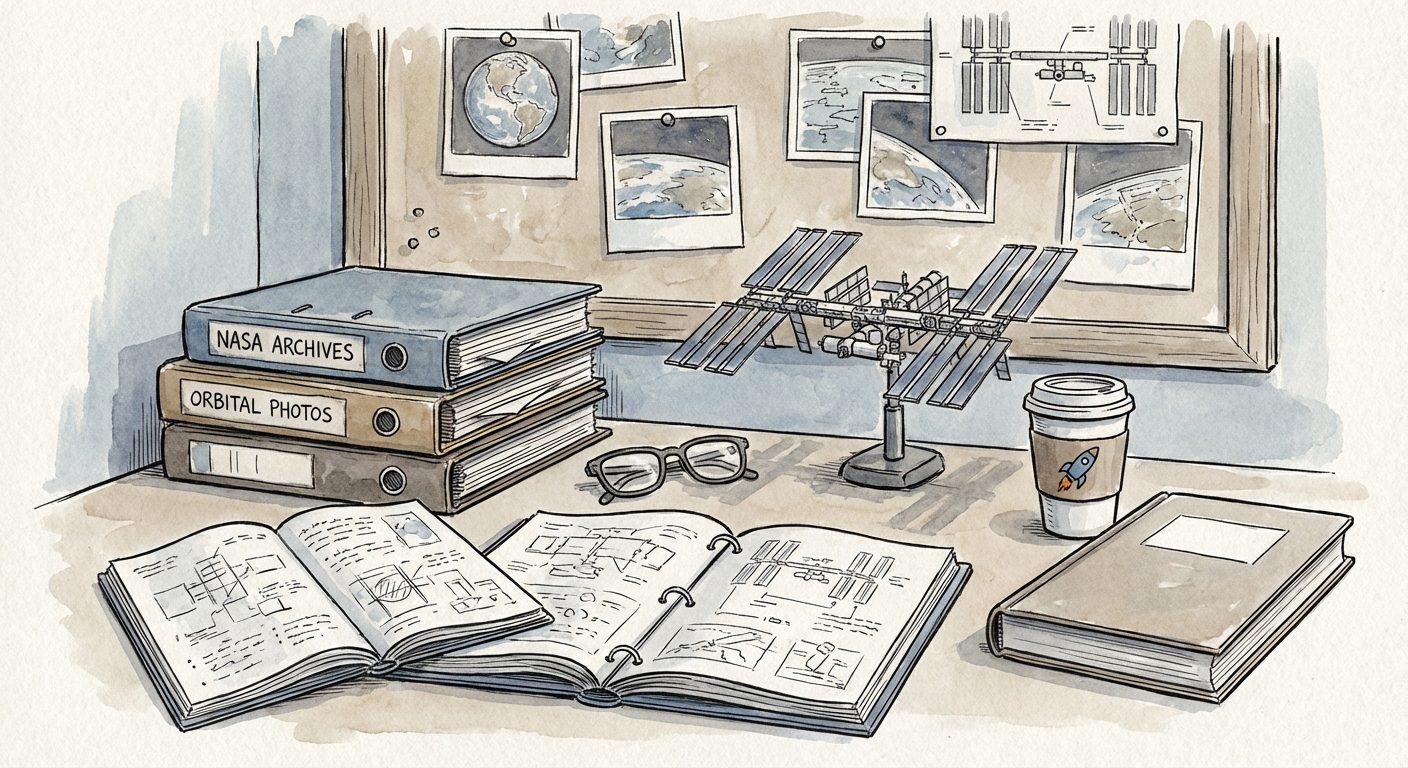
The novel takes place over exactly 24 hours aboard the International Space Station, and honestly, that premise alone should tell you this is not your typical literary fiction. Six people orbit Earth, suspended in that thin line between science and philosophy, between the technical and the transcendent. The Booker Prize 2024 Winner Announcement noted how rare it is for a book of this scale to command such attention in contemporary literary spaces. But “Orbital” isn’t small in ambition just because it’s small in page count. If anything, the brevity makes it more powerful.

Illustration for Why Your Book Club Should Immediately Add Samantha Harvey's 'Orbital' to Your Reading List
Illustration for Why Your Book Club Should Immediately Add Samantha Harvey’s ‘Orbital’ to Your Reading List

The Translation Question That Nobody Asked Yet

Here’s what fascinates me most about “Orbital,” and why I think it’s essential for book clubs to engage with it right now: this novel is fundamentally about translation. Not in the literal sense of language conversion, though there’s certainly that lurking beneath the surface. I mean translation as the core act of the book itself. Harvey takes the technical vocabulary of NASA, the precise measurements and orbital mechanics documented in real ISS archives, and translates it into lyrical, almost meditative prose. She consulted NASA’s actual orbital photography archives and real station documentation during her research, which means every scientific detail carries weight and authenticity. But here’s the clever part: she then translates this cold, technical reality into something deeply human and emotionally resonant.

When we talk about translation in literary circles, we usually mean moving words from one language into another. We debate whether a particular translator captured the essence of an original text, whether they prioritized fidelity or readability, whether they added their own flourishes or stayed invisible. But translation happens in other registers too. Harvey translates the lived experience of floating in space, of looking down at Earth, into something that makes readers sitting safely on the ground feel the vertigo, the wonder, and the terror. She translates climate anxiety and existential dread into meditations on beauty and perspective. She translates data points into human connection. Translation as art in its purest sense, and it’s something book clubs rarely get to discuss explicitly.

The novel was born partly from Harvey’s own insomnia and the climate anxiety that consumed her while writing. She spoke about this in interviews with The Guardian, and what strikes me is how she translated her personal suffering into a narrative that feels collective, that speaks to 2025 readers grappling with their own forms of sleeplessness and ecological dread. By setting the story in orbit, where the world appears as a unified whole rather than fragmented into borders and nations, she translates our earthbound anxieties into a kind of cosmic perspective. It’s a translation that shifts the way you see your own worries.

Why This Book Is Having Its Moment Right Now

The sales numbers tell an interesting story. Within three months of winning the Booker, “Orbital” had sold over 300,000 copies in the UK alone, according to The Bookseller UK Sales Reports. That’s not just bestseller territory. That’s cultural moment territory. For a literary fiction novel by a writer who wasn’t already a household name, that’s remarkable. But I think what’s happening here is that readers are hungry for exactly what Harvey offers: something brief enough to feel manageable in chaotic times, yet profound enough to genuinely change how you think about existence.

We’re living in an era of reading anxiety. Everyone’s busy. Everyone’s overwhelmed. There’s this paradoxical situation where people feel like they don’t have time to read, and yet reading feels more necessary than ever as a way to process the world. “Orbital” fits into this moment perfectly. It respects your time. It doesn’t require you to commit to 500 pages to find out if it’s worth your attention. But once you start it, you realize those 136 pages contain more depth and genuine literary artistry than books twice the length. It’s the kind of book that makes you feel intelligent and seen when you finish it, which is precisely what literary fiction should do.

What This Means for Book Clubs Specifically

This is where I think book clubs need to pay attention. The shortness of “Orbital” actually makes it an extraordinary choice for group discussion. You don’t have that barrier where half your group couldn’t finish it because they ran out of time. Everyone can read it. Everyone can have real, substantive thoughts about it. And there’s so much to unpack. The relationship between the crew members. The philosophical implications of seeing Earth from space. The way Harvey renders consciousness in microgravity. The climate questions that hover beneath every page. The scientific accuracy that astronauts themselves have praised in reviews. The translation of personal mental anguish into cosmic meditation.

Book clubs thrive on having things to discuss, and “Orbital” is stuffed with discussion fodder despite its modest length. You could talk for hours about the technical aspects and how Harvey balances them with the emotional core. You could debate what the novel is really saying about human connection and isolation. You could examine how the translation of real NASA data into fiction creates a specific kind of credibility and weight. You could ask whether short books deserve the same critical attention as longer ones, or whether brevity is its own kind of artistry worth celebrating more.

Make This Your Next Pick

I’m genuinely convinced that “Orbital” is one of those rare books that will age well. It won’t feel like a product of 2024 because it’s so deliberately concerned with timeless human questions viewed from an eternal perspective. But it’s also very much a novel of this moment, speaking to contemporary anxiety in a way that feels honest rather than exploitative. Harvey has written something that translates the untranslatable: what it means to see everything and feel helpless, to float above the world and recognize both its fragility and its resilience.

So here’s my midnight-text-worthy pitch: pick this for your next book club meeting. Read it this week if you can. Tell me what you think. Tell me whether the brevity felt like a feature or a limitation. Tell me how Harvey’s translation of the technical into the transcendent landed for you. Tell me if you think this deserves the Booker. Let’s have the conversation that should have been happening all along.

Percival Everett’s James Won the Pulitzer, and the Translation of an American Soul is Why We Can’t Stop Talking About It

The Overnight Sensation That Took Four Decades to Arrive

I need to tell you something that’s been living rent-free in my head since May 2025: Percival Everett won the Pulitzer Prize for Fiction for James, and the literary world is still buzzing. But here’s the part that gets me every time I think about it. Everett had already written more than twenty novels before this moment. Twenty. He’d been publishing for over four decades, quietly building this incredible body of work while the mainstream literary establishment largely ignored him. Then James arrived, and suddenly everyone wanted to talk about him.

Percival Everett's James Won the Pulitzer, and the Translation of an American Soul is Why We Can't Stop Talking About It
Percival Everett’s James Won the Pulitzer, and the Translation of an American Soul is Why We Can’t Stop Talking About It

It’s this strange phenomenon in publishing where an author can be prolific and respected in certain circles for literal decades, and then one book cracks something open. One book finds the exact right audience at the exact right moment. When the Pulitzer Prize 2025 Fiction announcement dropped, it wasn’t just about recognizing James. It was about finally giving Everett the mainstream recognition his entire career deserved.

Illustration for Percival Everett's James Won the Pulitzer, and the Translation of an American Soul is Why We Can't Stop Talking About It
Illustration for Percival Everett’s James Won the Pulitzer, and the Translation of an American Soul is Why We Can’t Stop Talking About It

What James Actually Is: A Translation of Perspective

Here’s where I need you to sit with me for a moment, because this is crucial to understanding why James matters so much. The novel retells Adventures of Huckleberry Finn entirely from Jim’s perspective. Now, I know what you might be thinking: another Twain revisitation, another contemporary take on a classic. But that’s not what Everett is doing here. He’s doing something far more complex and linguistically radical.

Think of it as translation work, except he’s not translating between languages. He’s translating between ways of knowing the world. He’s taking a character who was silenced, who spoke in dialect designed to mark him as less than, and giving him the full complexity of interior life and linguistic mastery. When Everett writes Jim, he’s not just changing whose story we hear. He’s changing the very language through which we understand what it means to be human in this narrative. The book spent over thirty weeks on the New York Times bestseller list, which tells you how many readers understood they were holding something revolutionary.

This is what separates James from simple retellings. It’s not a cosmetic shift. It’s a fundamental restructuring of how meaning gets made.

The Rare Double Crown and What It Signifies

Let me back up slightly and tell you about something genuinely uncommon in literary prize history. James won the Booker Prize in 2024. Then it won the Pulitzer Prize in 2025. Do you understand how rare that is? Winning both major international prizes for the same novel places Everett in genuinely rare company. It means readers and critics across different continents, different publishing traditions, different literary sensibilities all looked at this book and said: yes, this one.

The book sold over five hundred thousand copies in its first year. That number should sit with you. Those aren’t typical literary fiction numbers. That’s cultural moment numbers. That’s people buying it for their friends, discussing it at book clubs, pressing it into the hands of strangers on the subway. The novel had moved something in the collective consciousness.

When a book wins both the Booker and the Pulitzer, it achieves this strange alchemy where literary establishment recognition and genuine popular engagement align completely. That almost never happens.

Translation as Radical Act

I want to push deeper into something that I think gets overlooked when we talk about James. Translation studies scholars have this concept called “foreignization” versus “domestication.” When you translate a text, you can either make the foreign familiar to your readers, or you can preserve its foreignness and make your readers work to meet it. Most commercial translations choose domestication. It’s easier. It’s more comfortable.

What Everett does in James operates in a similar register. He’s foreignizing Huckleberry Finn. He’s making the canonical American novel strange to American readers by fundamentally shifting whose language and consciousness we inhabit. He’s taking a text that many Americans read in school as a pillar of American literature, and he’s saying: you’ve only ever heard half of this story. You’ve been listening to the wrong voice.

This is why Percival Everett on rewriting American mythology keeps coming up in conversation. Because what he’s doing isn’t supplementary. It’s not filling in gaps or adding representation as an afterthought. He’s fundamentally retranslating what American literature means and who gets to speak within it.

Why This Matters Beyond Prize Season

Here’s what keeps me up about James winning the Pulitzer. It signals something about where literary culture might be moving. For decades, we’ve been told certain stories about which books matter and why. We’ve been offered a canon that reflected particular power structures and particular ways of seeing the world. Everett’s victory, combined with the book’s genuine popularity and international recognition, suggests that readers are actively seeking out works that challenge and retranslate that inheritance.

The book didn’t win because it was safe or comfortable. It won because it did the hard linguistic and imaginative work of making us reconsider what we think we know. It won because Everett spent four decades as a writer before delivering a novel that felt urgent and essential. It won because translation, in all its forms, is finally being recognized as one of the most important artistic acts we can perform in literature.

I’ve been recommending James to everyone I know, and I’m genuinely curious what you think about it. Have you read it yet? What pulled you in or pushed back? I want to know which moments in the prose struck you, which retellings surprised you most. Reading James and then talking about it with other readers has become this unexpected reminder that literature is both deeply personal and genuinely communal.

The Books That Beat Me: When Literary Darlings and Personal Taste Collide

I have a confession that makes me squirm a little: there’s a stack of bookmarks on my nightstand, each one marking the exact page where I surrendered. Page 127 of The Goldfinch. Page 89 of Normal People. Page 203 of Infinite Jest. These aren’t books I hated—that would be easier to explain. These are books that everyone else seems to love, books that won awards and sparked passionate discussions, books that left me feeling like I was missing some crucial reading gene.

It took me years to admit that sometimes the problem isn’t the book. Sometimes it’s just not the right book for me, at this moment, in this phase of my reading life. But that realization came only after I stopped treating DNF (did not finish) like a moral failing and started examining what actually happens when a reader and a book don’t click.

When Beautiful Writing Feels Like Homework

Donna Tartt’s The Goldfinch should have been catnip for me. Art history, grief, a coming-of-age story wrapped in gorgeous prose—all things I typically devour. But somewhere around page 127, I realized I was reading it like medicine, dutifully turning pages because I felt I should appreciate it, not because I wanted to know what happened next. Tartt’s sentences are undeniably beautiful, each one crafted with the precision of a master painter, but they felt so deliberate, so aware of their own beauty, that they pulled me out of the story rather than deeper into it.

This happens more often than I care to admit with literary fiction that wins major prizes. The writing is objectively excellent, but it feels performative in a way that makes me hyperaware I’m reading rather than living in the story. It’s like being at a dinner party with someone who’s clearly rehearsed every anecdote. Impressive, yes. Engaging for three hours? Not so much.

I’ve learned to recognize this feeling now, that subtle shift from absorption to obligation. When I catch myself calculating how many pages I have left rather than wondering what comes next, it’s usually time to bow out gracefully.

The Intimacy Problem

Sally Rooney’s Normal People broke me in a different way. The book opens with Marianne and Connell in high school, navigating the particular cruelty of teenage social dynamics, and I was immediately transported back to my own adolescent awkwardness. But then something strange happened: the intimacy Rooney creates between her characters felt so raw, so unfiltered, that reading it began to feel like eavesdropping on someone’s therapy session.

Rooney has an uncanny ability to capture the internal monologue of young people figuring out love and sex and power. Every misunderstanding between Marianne and Connell rang true, every moment of miscommunication felt painfully familiar. But that’s exactly why I couldn’t continue. The emotional precision was so acute it made me uncomfortable, like looking directly into someone else’s diary without permission.

Sometimes books hit too close to home, and that’s not necessarily a flaw in the book. It might just mean you’re not ready for what that particular story is offering. I set Normal People aside at page 89, not because it wasn’t good, but because it was too good at excavating feelings I wasn’t prepared to examine.

When Ambition Overwhelms Experience

David Foster Wallace’s Infinite Jest represents a different kind of surrender entirely. I approached it with the dedication of someone training for a marathon, armed with online reading guides and a notebook for tracking characters. I wanted to love it. I wanted to be the kind of reader who could handle Wallace’s maximalist approach, who could surf the waves of his sentences without drowning in footnotes.

For 203 pages, I gamely followed Wallace’s labyrinthine plot threads and philosophical tangents. There were moments of genuine brilliance, passages that made me stop and reread them just for the pleasure of experiencing that perfect combination of intellect and emotion. But ultimately, I felt like I was working harder than Wallace was to make the book cohere. The impressive technical skill couldn’t compensate for what felt like a fundamental lack of trust in the reader’s ability to find meaning without constant intellectual fireworks.

This kind of ambitious literary fiction often feels like it’s trying to prove something rather than tell something. The difference is subtle but important. When a book is trying to prove its own importance, I can feel the effort, and it exhausts me as a reader.

The Pacing Mismatch

Sometimes the issue is purely mechanical. I abandoned Jennifer Egan’s A Visit from the Goon Squad not because I disliked her experimental structure or interconnected storylines, but because the pacing felt completely at odds with what I needed from a book at that moment in my life. Egan jumps between characters and time periods with the confidence of someone who knows exactly where she’s going, but I found myself constantly reorienting, working to keep track of who was whom and when we were.

This isn’t a criticism of Egan’s technique—the book won a Pulitzer, and I can see why. But I was reading it during a particularly chaotic period, when I needed fiction to be a refuge rather than a puzzle to solve. The book demanded a kind of active engagement I simply couldn’t give it at the time.

Pacing is deeply personal. What feels like a satisfying slow burn to one reader might feel sluggish to another. What feels like an exciting pace to one person might feel frantic to someone else. There’s no objective “right” pace for a novel, only the pace that works for each individual reader in each individual moment.

Making Peace with Unfinished Business

I used to feel guilty about these abandoned books, as if I’d failed them somehow. But I’ve come to see DNF as a form of reader self-awareness. Life is short, and there are too many books that will grab me from page one and never let go to spend time struggling through ones that don’t.

That said, I keep those bookmarks. Sometimes what doesn’t work for you at twenty-five works perfectly at thirty-five. Sometimes you need to be in a different emotional place, or have different reading experience under your belt, or simply be in a different season of life. The Goldfinch might be perfect for me in ten years. Normal People might hit differently when I’m further from my own messy young adulthood.

The beauty of being a reader is that the conversation between you and a book is always evolving. Today’s DNF might be tomorrow’s life-changing read. What books have you set aside, and what do you think they were asking of you that you weren’t ready to give?