A Booker Prize Winner That Quietly Rewrote the Rules
I need to tell you about a book that won the Booker Prize last November and somehow nobody is talking about it enough. Samantha Harvey’s “Orbital” is the kind of novel that makes you text your entire group chat at 2 AM asking if anyone else just finished it yet, because you cannot sit with this alone. What makes this win particularly wild is the sheer audacity of it: Harvey is the first British woman to win the Booker Prize since Hilary Mantel claimed it back in 2012, and she did it with a book that’s only 136 pages long. This isn’t some massive, sprawling epic with chapters that feel like separate novellas. This is the shortest Booker Prize winner in the award’s entire 56-year history. Think about that for a moment. In a competition historically dominated by books you could use as a doorstop, Harvey walked in with something you can finish in a single sitting and changed the conversation.

The novel takes place over exactly 24 hours aboard the International Space Station, and honestly, that premise alone should tell you this is not your typical literary fiction. Six people orbit Earth, suspended in that thin line between science and philosophy, between the technical and the transcendent. The Booker Prize 2024 Winner Announcement noted how rare it is for a book of this scale to command such attention in contemporary literary spaces. But “Orbital” isn’t small in ambition just because it’s small in page count. If anything, the brevity makes it more powerful.
The Translation Question That Nobody Asked Yet
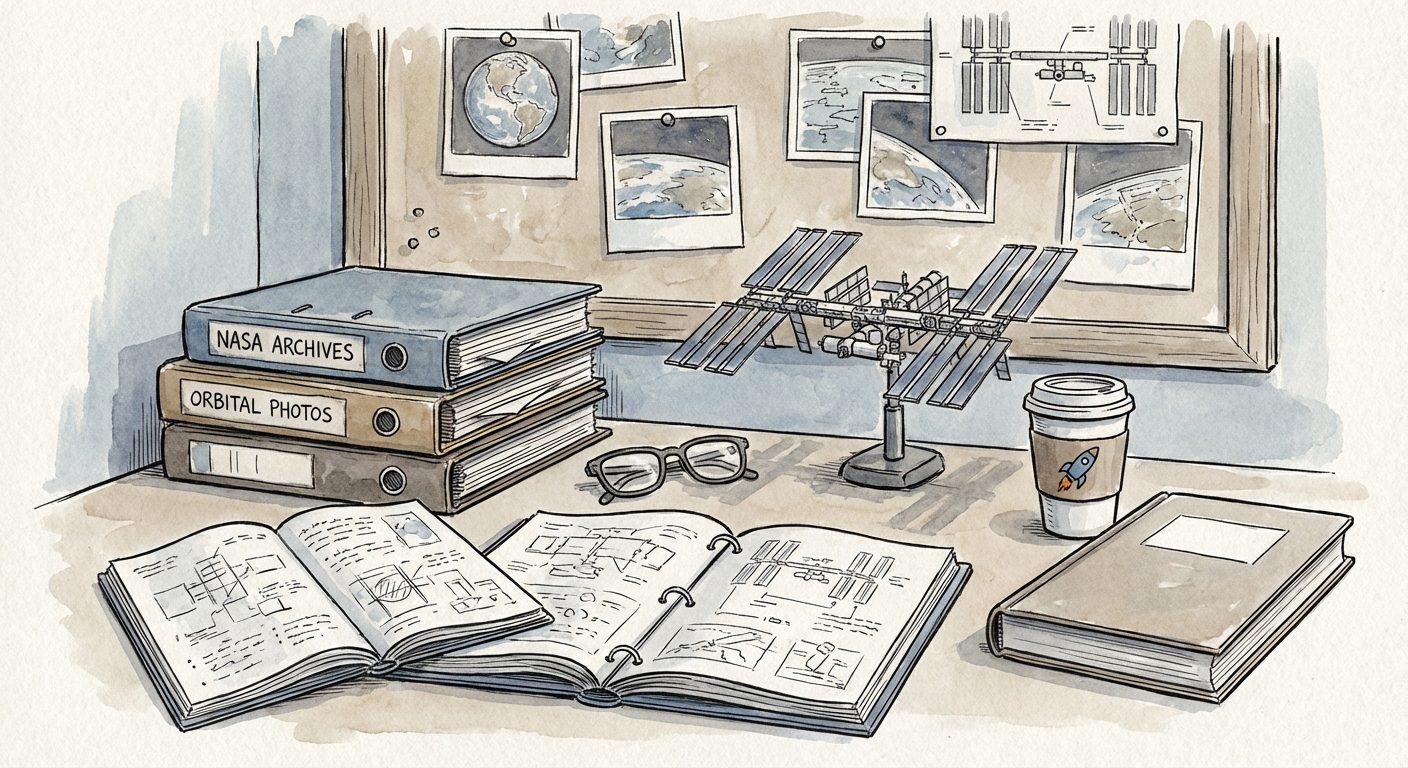
Here’s what fascinates me most about “Orbital,” and why I think it’s essential for book clubs to engage with it right now: this novel is fundamentally about translation. Not in the literal sense of language conversion, though there’s certainly that lurking beneath the surface. I mean translation as the core act of the book itself. Harvey takes the technical vocabulary of NASA, the precise measurements and orbital mechanics documented in real ISS archives, and translates it into lyrical, almost meditative prose. She consulted NASA’s actual orbital photography archives and real station documentation during her research, which means every scientific detail carries weight and authenticity. But here’s the clever part: she then translates this cold, technical reality into something deeply human and emotionally resonant.
When we talk about translation in literary circles, we usually mean moving words from one language into another. We debate whether a particular translator captured the essence of an original text, whether they prioritized fidelity or readability, whether they added their own flourishes or stayed invisible. But translation happens in other registers too. Harvey translates the lived experience of floating in space, of looking down at Earth, into something that makes readers sitting safely on the ground feel the vertigo, the wonder, and the terror. She translates climate anxiety and existential dread into meditations on beauty and perspective. She translates data points into human connection. Translation as art in its purest sense, and it’s something book clubs rarely get to discuss explicitly.
The novel was born partly from Harvey’s own insomnia and the climate anxiety that consumed her while writing. She spoke about this in interviews with The Guardian, and what strikes me is how she translated her personal suffering into a narrative that feels collective, that speaks to 2025 readers grappling with their own forms of sleeplessness and ecological dread. By setting the story in orbit, where the world appears as a unified whole rather than fragmented into borders and nations, she translates our earthbound anxieties into a kind of cosmic perspective. It’s a translation that shifts the way you see your own worries.
Why This Book Is Having Its Moment Right Now
The sales numbers tell an interesting story. Within three months of winning the Booker, “Orbital” had sold over 300,000 copies in the UK alone, according to The Bookseller UK Sales Reports. That’s not just bestseller territory. That’s cultural moment territory. For a literary fiction novel by a writer who wasn’t already a household name, that’s remarkable. But I think what’s happening here is that readers are hungry for exactly what Harvey offers: something brief enough to feel manageable in chaotic times, yet profound enough to genuinely change how you think about existence.
We’re living in an era of reading anxiety. Everyone’s busy. Everyone’s overwhelmed. There’s this paradoxical situation where people feel like they don’t have time to read, and yet reading feels more necessary than ever as a way to process the world. “Orbital” fits into this moment perfectly. It respects your time. It doesn’t require you to commit to 500 pages to find out if it’s worth your attention. But once you start it, you realize those 136 pages contain more depth and genuine literary artistry than books twice the length. It’s the kind of book that makes you feel intelligent and seen when you finish it, which is precisely what literary fiction should do.
What This Means for Book Clubs Specifically
This is where I think book clubs need to pay attention. The shortness of “Orbital” actually makes it an extraordinary choice for group discussion. You don’t have that barrier where half your group couldn’t finish it because they ran out of time. Everyone can read it. Everyone can have real, substantive thoughts about it. And there’s so much to unpack. The relationship between the crew members. The philosophical implications of seeing Earth from space. The way Harvey renders consciousness in microgravity. The climate questions that hover beneath every page. The scientific accuracy that astronauts themselves have praised in reviews. The translation of personal mental anguish into cosmic meditation.
Book clubs thrive on having things to discuss, and “Orbital” is stuffed with discussion fodder despite its modest length. You could talk for hours about the technical aspects and how Harvey balances them with the emotional core. You could debate what the novel is really saying about human connection and isolation. You could examine how the translation of real NASA data into fiction creates a specific kind of credibility and weight. You could ask whether short books deserve the same critical attention as longer ones, or whether brevity is its own kind of artistry worth celebrating more.
Make This Your Next Pick
I’m genuinely convinced that “Orbital” is one of those rare books that will age well. It won’t feel like a product of 2024 because it’s so deliberately concerned with timeless human questions viewed from an eternal perspective. But it’s also very much a novel of this moment, speaking to contemporary anxiety in a way that feels honest rather than exploitative. Harvey has written something that translates the untranslatable: what it means to see everything and feel helpless, to float above the world and recognize both its fragility and its resilience.
So here’s my midnight-text-worthy pitch: pick this for your next book club meeting. Read it this week if you can. Tell me what you think. Tell me whether the brevity felt like a feature or a limitation. Tell me how Harvey’s translation of the technical into the transcendent landed for you. Tell me if you think this deserves the Booker. Let’s have the conversation that should have been happening all along.