You step outside after supper and there it is: a moon the color of warm butter, already above the eastern treeline while the sky still holds a band of pale blue. For a few evenings in a row, it seems to arrive almost on schedule, rising only about 25 to 30 minutes later each night instead of the usual 50 minutes. That is the Harvest Moon, the full moon nearest the autumnal equinox, and it is not just a pretty name. It is a working moon, a seasonal marker, and a small lesson in how the sky behaves differently depending on where you stand on Earth.
For anyone who keeps time by the sun and moon without a watch, the Harvest Moon matters because it changes the rhythm of evening light. At temperate latitudes in the Northern Hemisphere, the shallow angle of the ecliptic near the September equinox means the moon’s nightly delay shrinks. At equatorial latitudes, the effect is less dramatic, but the moon still climbs nearly straight up from the horizon, which has its own visual consequences. This article is about what the Harvest Moon actually does, why it does it, and what people have made of it across cultures. It is also about what you can see with your own eyes, no telescope required.
What the Harvest Moon Is, Exactly
The Harvest Moon is not a larger moon, a redder moon, or a moon that stays up all night longer than any other full moon. It is simply the full moon that falls closest to the September equinox. In most years that means September, but about once every three years it lands in early October. The name comes from northern European and North American agricultural traditions: before electric light, farmers used the moon’s early evening rise to extend the workday and bring in crops. The moon’s light arrived just as the sun’s light faded, and for several nights in a row, that arrival came sooner than expected.
The mechanism is orbital geometry. The moon’s path around Earth is tilted about 5 degrees from Earth’s path around the sun, the ecliptic. Near the September equinox, the ecliptic makes a shallow angle with the eastern horizon at mid-northern latitudes. Because the moon’s orbit is close to the ecliptic, the moon’s position from one night to the next shifts mostly sideways along the horizon rather than downward. The result is a shorter-than-average gap between successive moonrises. At 40 degrees north latitude, the delay can be as little as 23 minutes. At the equator, the delay is closer to 30 to 35 minutes, still shorter than the annual average of about 50 minutes, but the effect is less pronounced because the ecliptic meets the horizon at a steeper angle there.
The Moonrise Illusion and the Color of the Harvest Moon
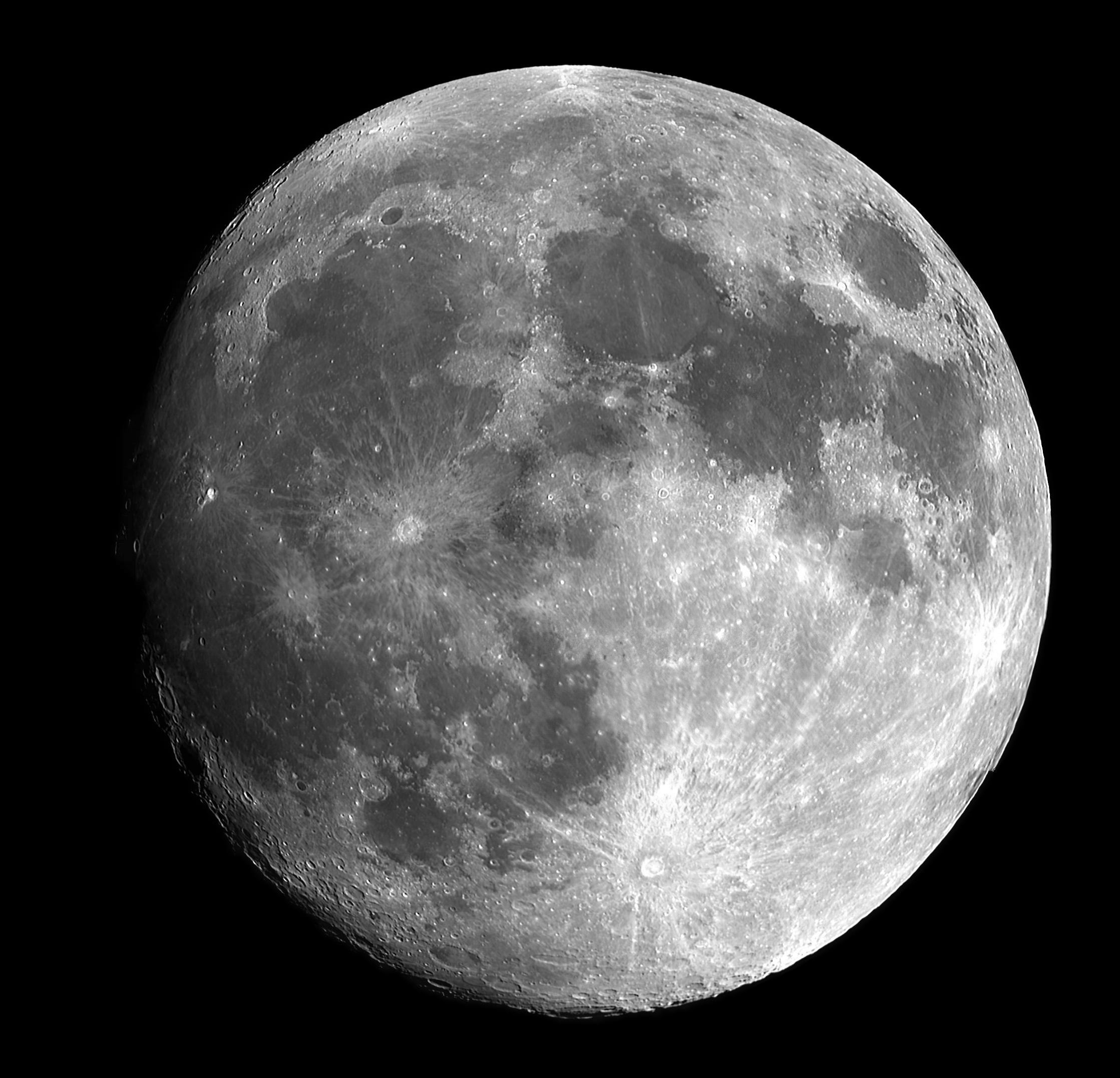
Part of the Harvest Moon’s reputation comes from how it looks near the horizon. It appears larger than when it is high overhead, but that is an optical illusion, not a change in the moon’s actual size. The moon’s disk spans about half a degree of sky, roughly the width of a fingernail held at arm’s length, whether it is rising or overhead. Near the horizon, the brain compares the moon to trees, buildings, and hills, and reads it as bigger. The illusion is strong enough that even knowing about it does not make it disappear.
The color is real, though. When the moon is low, its light travels through a longer path of atmosphere. Shorter wavelengths scatter away, leaving the longer red and orange wavelengths. The same process colors sunsets. A rising Harvest Moon can look amber, copper, or pale gold, especially if there is dust, smoke, or humidity in the air. At temperate latitudes in late summer and early autumn, agricultural dust and wildfire smoke can deepen the color. At equatorial latitudes, where the moon rises more steeply, the color fades faster because the moon climbs out of the thickest air more quickly.
What You Can Observe Without Instruments
The Harvest Moon is a good time to start a simple moon journal. For three or four evenings around the full moon, note the time the moon clears your local horizon or a fixed landmark such as a roofline or a hill. A phone camera with a timestamp works, but a notebook and a pencil are just as good. Record the moon’s compass bearing, its color, and how high it is when the sky reaches full darkness. If you live at a temperate latitude, you will likely see the moon rise only 20 to 30 minutes later each night. If you live near the equator, the delay will be closer to 30 to 40 minutes, and the moon will climb more vertically.
One practical use of the Harvest Moon is as a natural calendar check. The full moon nearest the equinox marks the turn from long summer evenings to the faster darkening of autumn. In the Northern Hemisphere, it is a reminder that the sun’s arc is dropping and the nights are lengthening. In the Southern Hemisphere, the same full moon is the one nearest the March equinox, and it carries a different seasonal meaning. The name Harvest Moon is a Northern Hemisphere convention, but the orbital mechanics are global.
Cultural Names and Seasonal Meanings
The Harvest Moon is one of many full moon names that come from specific places and seasons. The name is most common in English-speaking agricultural regions, but other cultures have their own names for the same moon. In China and Vietnam, the full moon nearest the September equinox is associated with the Mid-Autumn Festival, a harvest and family gathering marked by mooncakes and lanterns. In Japan, the moon is called Chushu no Meigetsu, the mid-autumn moon, and is celebrated with tsukimi, or moon viewing. In Korea, the festival is Chuseok, a major harvest holiday. These are not the same as the European Harvest Moon, but they share the same astronomical timing and the same human response: a bright moon in a season of gathering.
What is often lost in modern moon-name lists is that the Harvest Moon was a functional name, not a decorative one. It told farmers that the light would be there when they needed it. The moon’s early rise meant that work could continue after sunset without a long dark gap. That practical meaning is still visible if you spend a few evenings watching the moonrise. You are seeing the same light that organized harvest labor for centuries.
Why the Harvest Moon Is Not the Same Everywhere
The Harvest Moon effect depends on latitude. At 50 degrees north, the moonrise delay can shrink to about 15 minutes. At 10 degrees north, the delay is closer to 35 minutes, and the moon’s path is steeper. At the equator, the moon rises almost perpendicular to the horizon, so the Harvest Moon effect is minimal. The moon still rises about 30 minutes later each night, but the dramatic early-evening moon of temperate latitudes is less noticeable. This is a good example of how naked-eye astronomy is local. A moon calendar written for London or New York does not describe the sky in Quito or Singapore.
For readers at equatorial latitudes, the more interesting observation is the moon’s steep climb and the rapid change in its color and apparent size. The moonrise illusion is weaker near the equator because there are fewer horizon cues, but the moon’s brightness is often more intense because it passes through less atmosphere. The Harvest Moon is a chance to compare your own sky with the descriptions in northern European and North American folklore, and to notice what those stories leave out.
A Simple Method for Measuring the Moonrise Delay
You can measure the Harvest Moon effect with a stick, a flat surface, and a little patience. On the evening of the full moon, mark the time the moon’s lower limb touches the horizon. The next evening, do the same. The difference is the moonrise delay. For a more precise measurement, use a fixed landmark and note the time the moon reaches the same height above it. A phone app that shows the moon’s altitude and azimuth can help, but the point is to see the pattern with your own eyes. The delay is not constant; it changes with the moon’s position in its orbit and with your latitude. But over three or four nights, the pattern is clear.
This kind of observation is the foundation of seasonal light literacy. You do not need a telescope or a dark-sky site. You need a clear eastern horizon, a way to mark time, and the willingness to go outside at the same time each evening. The Harvest Moon is a good entry point because the effect is strong and the moon is easy to find.
Common Misconceptions About the Harvest Moon
One common misconception is that the Harvest Moon is always in September. It is not. The full moon nearest the September equinox can fall in early October. Another is that the Harvest Moon is always orange. The color depends on atmospheric conditions, not on the moon itself. A third is that the Harvest Moon rises at the same time every night. It does not; it rises later each night, just less later than usual. A fourth is that the Harvest Moon is bigger than other full moons. It is not; the apparent size difference between the Harvest Moon and other full moons is too small to notice without careful measurement.
These misconceptions persist because the Harvest Moon is often described in poetic terms rather than astronomical ones. The poetry is not wrong, but it can obscure the mechanics. The moon’s early rise is a real, measurable effect. The color is a real atmospheric effect. The apparent size is a real perceptual effect. All three can be observed and understood without losing any of the wonder.
How to Use the Harvest Moon in a Seasonal Practice
If you keep a seasonal journal, the Harvest Moon is a natural anchor. Note the date of the full moon, the time of moonrise, the color, and the weather. Compare it to the same observations at the spring equinox. At temperate latitudes, the difference in moonrise delay is striking. At the equator, the difference is smaller, but the moon’s path and the length of twilight change in their own way. Over a year, these notes become a personal almanac, a record of how the sky moves through the seasons.
The Harvest Moon also marks a good time to check your local horizon. Trees that were full of leaves in June may be thinning in September, changing the moonrise view. Buildings and hills that block the eastern horizon in summer may be more visible in autumn. A simple sketch of the eastern horizon, updated each season, is a useful tool for naked-eye astronomy. It helps you predict where the moon and sun will rise and set, and it makes the seasonal changes visible.
Frequently Asked Questions
Why does the Harvest Moon rise earlier than other full moons?
The Harvest Moon rises earlier relative to sunset because the moon’s orbit is close to the ecliptic, and near the September equinox the ecliptic makes a shallow angle with the eastern horizon at mid-northern latitudes. This reduces the nightly delay in moonrise from about 50 minutes to as little as 20 to 30 minutes. The effect is strongest at higher latitudes and weaker near the equator.
Is the Harvest Moon always in September?
No. The Harvest Moon is the full moon nearest the September equinox, which means it can fall in late September or early October. In about one year out of three, the October full moon is the Harvest Moon and the September full moon is the Corn Moon or another traditional name.
Does the Harvest Moon look bigger than other full moons?
No. The Harvest Moon’s apparent size is essentially the same as any other full moon. The moon’s disk spans about half a degree of sky, roughly the width of a fingernail at arm’s length. The moonrise illusion makes it look larger near the horizon, but that is a perceptual effect, not a physical change.
Can I see the Harvest Moon effect at the equator?
Yes, but it is less dramatic. At the equator, the moonrise delay is closer to 30 to 35 minutes, and the moon climbs more steeply. The early-evening moon of temperate latitudes is less noticeable, but the moon’s brightness and rapid color change are still worth observing.
Further Reading and Next Steps
If you want to go deeper, the next step is to observe the moon’s position against the background stars over several nights. The Harvest Moon is a good starting point because it is bright and easy to find. From there, you can track the moon’s monthly cycle, the changing angle of the ecliptic, and the seasonal shift in sunrise and sunset. A future article on this blog will cover the moon’s 18.6-year nodal cycle and how it affects the moon’s rising and setting points. For now, the Harvest Moon is enough: a bright, early-rising moon that has organized human work and celebration for centuries, and that still rewards a few minutes of attention on a clear autumn evening.