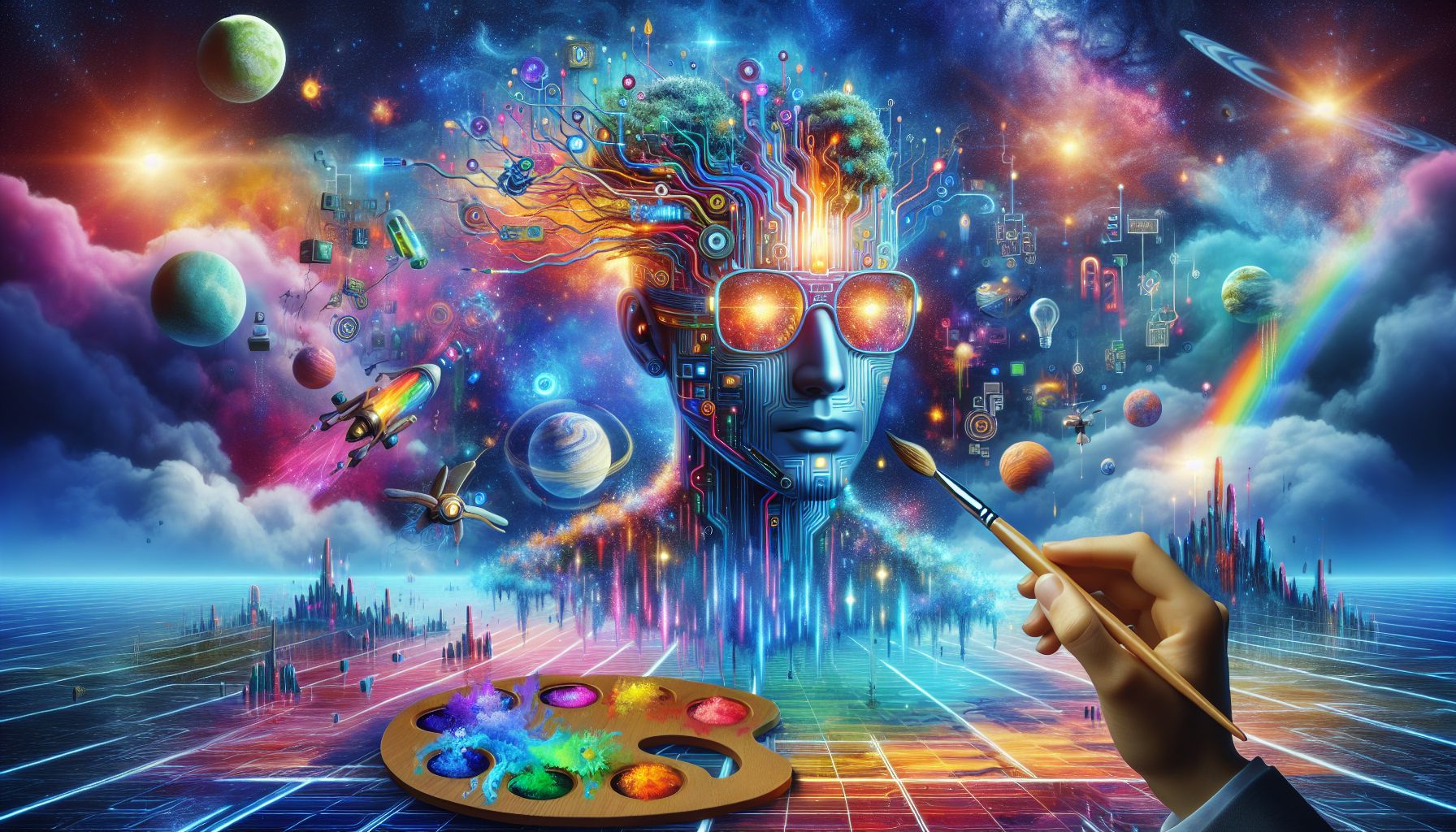
Hey fellow tech enthusiasts and future-seekers! Welcome back to my wild musings on all things that hover around the edges of science fiction but are oh-so-real today. As you grab your preferred steamy morning brew—or perhaps an energy elixir of choice—let’s talk about one of my personal obsessions: Artificial Intelligence’s bold foray into the realm of creative arts. Yes, the future is here, and it comes with a paintbrush…or should I say an algorithm?
Art’s Algorithmic Evolution
Gone are the Jane Jetson days where AI simply handled mundane tasks. Today’s AI is a digital sage capable of van Gogh strokes and Beethoven symphonies. OpenAI, Google Brain, and others are developing algorithms that aren’t just programmed to mimic creativity but to genuinely create. Imagine robots composing love songs, crafting headlines that put Hemingway to shame, or painting so well that art critics themselves question their own aesthetic inclinations.
Here’s the scoop: Neural networks are the brushes while the coded parameters are the paint. These digital artisans absorb a massive buffet of human art—novels, paintings, sonnets, and beyond—and then they remix and remaster. The Renaissance today comes served up in bits and bytes.
Hey Picasso, Meet Da Vinci Code
Picture this: Algorithms have started dabbling where only Monet and Dalí dared to venture—creating distinct art with a dash of abstract mystery. Recently, an AI-generated artwork sold at auction for hundreds of thousands of dollars. The piece combined digital moonlit skies with classical symmetry in ways that felt both familiar and completely alien.
What’s fascinating is how these AI creations make us question what we value in art. When a machine produces something that moves us emotionally, does it matter that no human hand touched the canvas? The value becomes surprisingly intrinsic, challenging our assumptions about creativity and authorship.
Raising the Cultural Bar
Critics scratching their heads aside, there’s serious magic happening here. AI-produced creative works aren’t just adding vanilla content to our culture; they’re pushing boundaries in unexpected ways. These systems can blend influences from completely different eras and cultures, creating works that transcend traditional artistic barriers.
I’ve seen AI compose music that combines baroque structures with modern electronic elements, or generate poetry that mixes haiku traditions with contemporary urban themes. It’s creating a new kind of cultural cross-pollination that human artists might never have attempted.
The Unwritten Future
Here’s where things get really interesting. We’re standing at the edge of something unprecedented in human history. For the first time, we have non-human entities creating art that genuinely moves people. Some of it is derivative, sure. But some of it is pushing into territories that feel genuinely new.
The question isn’t whether AI will replace human artists—I don’t think it will. Instead, I think we’re heading toward a collaboration between human creativity and machine capability that could produce art forms we can’t even imagine yet.
Where Do We Go From Here?
Look, I’ll be honest—part of me is excited, and part of me is a little unsettled by all this. There’s something both thrilling and slightly unnerving about watching machines create beauty. But that’s probably how people felt when photography was invented and painters worried about their relevance.
What I do know is that we’re witnessing the birth of a new creative medium. AI art isn’t trying to replace human creativity—it’s expanding what’s possible. And that, my fellow tech enthusiasts, is worth paying attention to.