Why We Need Books That Hold Us
Listen, I know you’re thinking about reaching for that thriller everyone’s raving about on BookTok, or maybe finally tackling that literary prize winner that’s been staring at you from your nightstand. But right now, when everything feels uncertain and your brain is running on fumes, what you actually need is different. You need a book that feels like coming home.
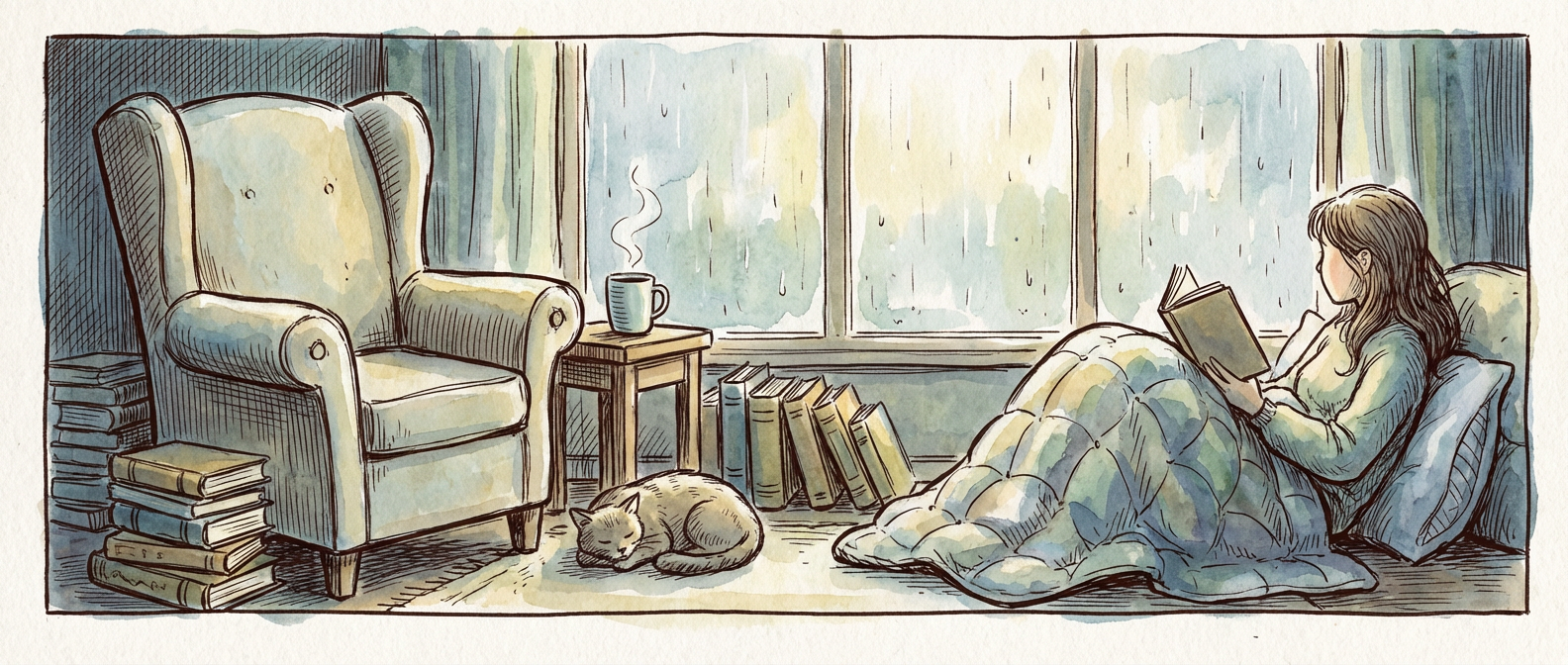
Comfort rereading isn’t about intellectual laziness or avoiding challenging literature. It’s about recognizing that sometimes our nervous systems need the literary equivalent of a weighted blanket. When I’m spiraling about deadlines or doom-scrolling until 2 AM, I don’t reach for something that’s going to demand emotional labor I don’t have. I reach for books that have already proven they can hold me safely while I remember how to breathe again.
The magic of comfort rereads lies in their predictability without boredom. You know Elizabeth Bennet will get her happy ending, but the journey there still delights. You know Harry will survive Voldemort, but the friendships along the way still warm your heart. This isn’t escapism in the sense of running away from reality. It’s more like stepping into a parallel universe where you already know the rules and can trust that things will work out.

The Foundation Layer: Books That Feel Like Hugs
Start with what I call the foundation layer, books so deeply comforting they’re like literary comfort food. Anne of Green Gables tops this list because Anne’s relentless optimism and fierce loyalty to her chosen family never fails to remind me that imagination and kindness are revolutionary acts. L.M. Montgomery understood something profound about resilience: it’s not about being unbreakable, it’s about finding beauty and possibility even when everything’s falling apart.
Diana Wynne Jones deserves a permanent spot here too. Howl’s Moving Castle and The Chrestomanci Chronicles create worlds where magic solves some problems and creates entirely new ones, but where fundamentally decent people figure things out together. Jones writes chaos with such warmth that even when her characters are literally falling through dimensions or dealing with fire demons, there’s an underlying sense that everything will be okay because people care about each other.
Don’t overlook The Princess Bride by William Goldman. Yes, the movie is perfect, but the book has this conversational layer where Goldman talks to you directly about storytelling and love and the things we choose to believe in. It’s simultaneously cynical and hopeful, which makes it perfect for those times when you’re feeling both exhausted by the world and desperate to believe in something good.
The Emotional Regulation Tier: Books That Understand Pain Without Wallowing
Sometimes comfort doesn’t mean avoiding difficult emotions. It means being held safely while you feel them. These are books that acknowledge life is hard but model healthy ways of moving through difficulty. A Tree Grows in Brooklyn by Betty Smith is masterful at this. Francie Nolan faces poverty, family dysfunction, and crushing disappointment, but Smith writes with such clear-eyed compassion that you come away feeling stronger, not depleted.
Terry Pratchett’s Discworld novels, particularly the Vimes books and anything featuring Death, handle profound questions about justice, mortality, and human nature with humor that never dismisses the seriousness of these topics. Night Watch or Mort can help you process heavy feelings while still believing in the possibility of doing better, being kinder, choosing hope over cynicism.
For those dealing with grief specifically, I always recommend The House in the Cerulean Sea by TJ Klune. Yes, it’s been hyped to death, but there’s a reason. Linus Baker’s journey from isolation to chosen family isn’t just about finding love. It’s about learning that healing happens in community, that it’s never too late to become the person you were meant to be, and that small acts of courage can change everything.
The Adventure Escape Hatch: When You Need to Leave Your Problems Behind
Sometimes the most comforting thing is temporary amnesia about your own life. This is where comfort adventure comes in. Stories so engaging they completely occupy your mental bandwidth without traumatizing you. The Goblin Emperor by Katherine Addison is political fantasy that somehow manages to be both complex and soothing. Maia’s journey from outcast to emperor focuses on kindness, competence, and building bridges rather than burning them down.
For historical comfort, nothing beats The Lymond Chronicles by Dorothy Dunnett, though I’ll warn you they’re dense and require commitment. If you’re looking for something lighter, Patrick O’Brian’s Aubrey-Maturin series offers maritime adventure with such loving attention to friendship and professional competence that even the naval battles feel cozy. There’s something deeply reassuring about stories where expertise matters and decent people figure out how to work together.
Murder mysteries deserve a mention here too, specifically the cozy variety where the violence happens off-page and the focus is on community and problem-solving. Louise Penny’s Inspector Gamache series creates the fictional village of Three Pines, where people know each other deeply and solving crimes is really about healing relationships and understanding human nature.
The Customization Factor: Building Your Personal Comfort Library
The most important thing about comfort rereading is that it’s deeply personal. What soothes me might agitate you, and vice versa. Some people find Jane Austen comforting. Others find her social commentary too sharp for vulnerable moments. Some love the epic sweep of The Lord of the Rings. Others need something more intimate and contemporary.
Pay attention to what your nervous system actually wants. Do you need humor or gentleness? Adventure or quiet character development? Found family or romantic love? There’s no wrong answer, only what works for you right now. I keep a running list on my phone of books that have successfully talked me off various emotional ledges, organized by type of distress and desired outcome.
Consider the pacing too. Sometimes you need the slow burn of a Victorian novel that unfolds like a leisurely walk through a familiar garden. Other times you need the page-turning momentum of genre fiction that carries you forward when you don’t have energy to push yourself. Both are completely valid choices.
The goal isn’t to stay in comfort reading forever. It’s to use these books as a launching pad back to emotional stability and curiosity about the world. Think of them as literary self-care that prepares you to engage with more challenging material when you’re ready. What are the books that hold you when everything else feels uncertain? I’d love to hear about the stories that have carried you through difficult times and helped you remember why reading matters.