When I Discovered Words Could Lie
I was twenty-three when I first read Elena Ferrante’s My Brilliant Friend in English, completely unaware that I was reading Ann Goldstein’s interpretation of Ferrante’s Italian. The rawness of Elena and Lila’s friendship felt so immediate, so perfectly captured, that I never questioned whether those exact words had come from Ferrante’s mind or Goldstein’s craft. It wasn’t until I picked up a battered copy of the Italian original years later that I realized how naive I’d been about translation.
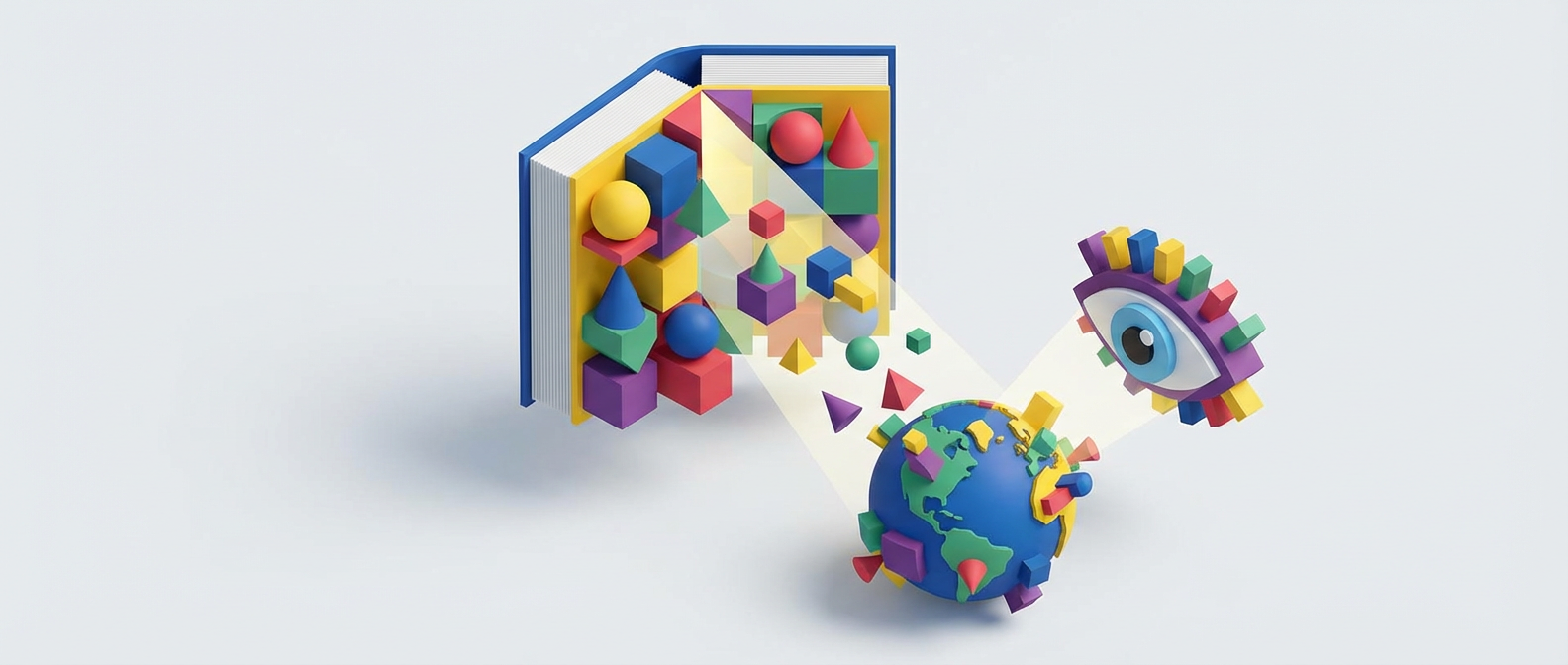
That dog-eared Italian edition sitting on my nightstand became my gateway drug to translation criticism. Suddenly, every foreign book on my shelves felt like a mystery I’d only half-solved. Were the sentences I’d fallen in love with actually the author’s, or had a translator’s sensibility shaped them into something new? The question kept me up at night, not because it made me love these books less, but because it revealed an entire artistic layer I’d been blind to.

The Murakami Problem That Everyone Ignores
Nothing shows the translation question quite like Haruki Murakami’s English-language success. I spent years wondering why his prose felt so distinctly “Murakami” across different translators, Jay Rubin, Philip Gabriel, Ted Goossen, until I started reading interviews with these translators themselves. They revealed something fascinating: Murakami writes with translation in mind, crafting sentences that anticipate their journey into English.
This realization completely changed my understanding of Norwegian Wood and The Wind-Up Bird Chronicle. The dreamy, slightly detached quality I’d attributed to Murakami’s worldview might actually be the result of prose designed for cross-cultural travel. It’s not that the books are less authentic. They’re differently authentic, written by an author who thinks in two languages at once.
Reading Rubin’s Making Sense of Japanese opened my eyes to the invisible choices happening in every paragraph. When Murakami’s characters speak in different levels of Japanese politeness, how does that translate to English, which lacks these built-in hierarchies? The answer shaped my understanding of power dynamics in relationships I thought I knew intimately. Translation isn’t just changing words. It’s rebuilding the emotional architecture of human interaction.
How Constance Garnett Invented Russian Literature
The most mind-bending discovery of my translation journey came through reading different versions of the same Russian classics. I’d grown up on Constance Garnett’s translations of Dostoevsky and Tolstoy, accepting her Victorian English as the natural voice of Russian literature. Then I encountered Richard Pevear and Larissa Volokhonsky’s newer translations, and it felt like meeting completely different authors.
Garnett’s Crime and Punishment reads like a stately English novel, with Raskolnikov speaking in measured, philosophical periods. Pevear and Volokhonsky’s version reveals a more frantic, colloquial Raskolnikov, his thoughts tumbling over each other in syntactic chaos that mirrors his mental state. Both translations are faithful to Dostoevsky, but they’re faithful to different aspects of his genius. Garnett to his philosophical depth, Pevear and Volokhonsky to his psychological urgency.
This comparison taught me that “accuracy” in translation is a myth. Every translator makes thousands of micro-decisions about tone, rhythm, and cultural context. Reading multiple translations of the same work isn’t about finding the “right” version. It’s about understanding how different translators hear the music of language differently. Now I think of classic Russian literature not as fixed texts, but as living conversations between cultures, continuing to evolve with each new translation.
The Untranslatable Spaces Where Culture Lives
Sometimes the most revealing moments come from what can’t be translated at all. Reading Jhumpa Lahiri’s essays about writing in Italian as a non-native speaker made me reconsider every bilingual author whose work I’d consumed without questioning the language choice. When authors like Lahiri, Vladimir Nabokov, or Yoko Tawada choose to write in their second language, they’re not just switching vocabulary. They’re accessing different emotional registers.
This hit home when I discovered that Roberto Bolaño wrote 2666 knowing it would be translated into English, but also knowing that certain Chilean references would remain opaque to English-speaking readers. The novel’s sense of cultural displacement isn’t just thematic. It’s built into the reading experience itself. Non-Spanish speakers encounter the book as outsiders, which mirrors the characters’ alienation from their own circumstances.
The untranslatable elements aren’t failures of translation. They’re features. They remind us that some experiences exist only within specific linguistic communities, and that literature’s power comes partly from this fundamental inability to cross certain borders completely. These gaps in understanding aren’t problems to solve. They’re spaces where empathy grows.
How Translation Changed How I Read Everything
Understanding translation as its own art form didn’t just change how I read foreign literature. It revolutionized my relationship with language itself. Now when I encounter a particularly beautiful sentence, I find myself wondering about the choices behind it. Did the author craft that rhythm deliberately, or did the translator create it while solving a completely different linguistic puzzle?
This awareness has made me a more generous reader. When a translated novel feels slightly off-kilter or when characters speak in ways that seem unnatural, I’ve learned to ask different questions. Instead of dismissing the work, I consider what cultural or linguistic gap might be creating that sensation. Sometimes that strangeness is precisely the point, a reminder that I’m encountering a worldview shaped by different assumptions about how language works.
The translation question has also made me more curious about the books I haven’t read yet. Every time someone recommends a foreign novel, I find myself researching the translator, reading reviews that mention translation quality, seeking out multiple versions when they exist. It’s turned reading into a more collaborative experience. I’m not just engaging with an author anymore, but with the entire team of people who helped carry that story across linguistic borders.
I’d love to hear about your own translation revelations. Have you ever read multiple translations of the same book? Discovered a translator whose work consistently draws you in? Or found yourself wondering what you’re missing when you read literature in translation? The conversation about how stories travel between languages feels more important than ever as literature becomes increasingly global.